History & Characteristics
The Yorkshire Terrier is a breed of contradictions: a working-class dog that became a Victorian fashion statement; a rodent hunter dressed in floor-length silk. Its origins lie in the textile mills and coal mines of 19th-century Yorkshire, England, where Scottish workers migrating south brought various terrier breeds — most notably the Clydesdale Terrier, the Paisley Terrier, and the Skye Terrier — and crossed them with local Yorkshire terrier stock to create a dog capable of hunting rats in tight underground spaces.
The early Yorkie was a practical, rough-and-tumble working dog. The transition from mill rat-catcher to aristocratic companion happened quickly: by the 1870s, the breed’s luxurious coat and diminutive size had captured the attention of the British upper class, and Yorkies began appearing at dog shows and in fashionable drawing rooms. The AKC recognized the Yorkshire Terrier in 1885, and it has been among the most popular breeds in America ever since — consistently ranking in the AKC’s top 10.
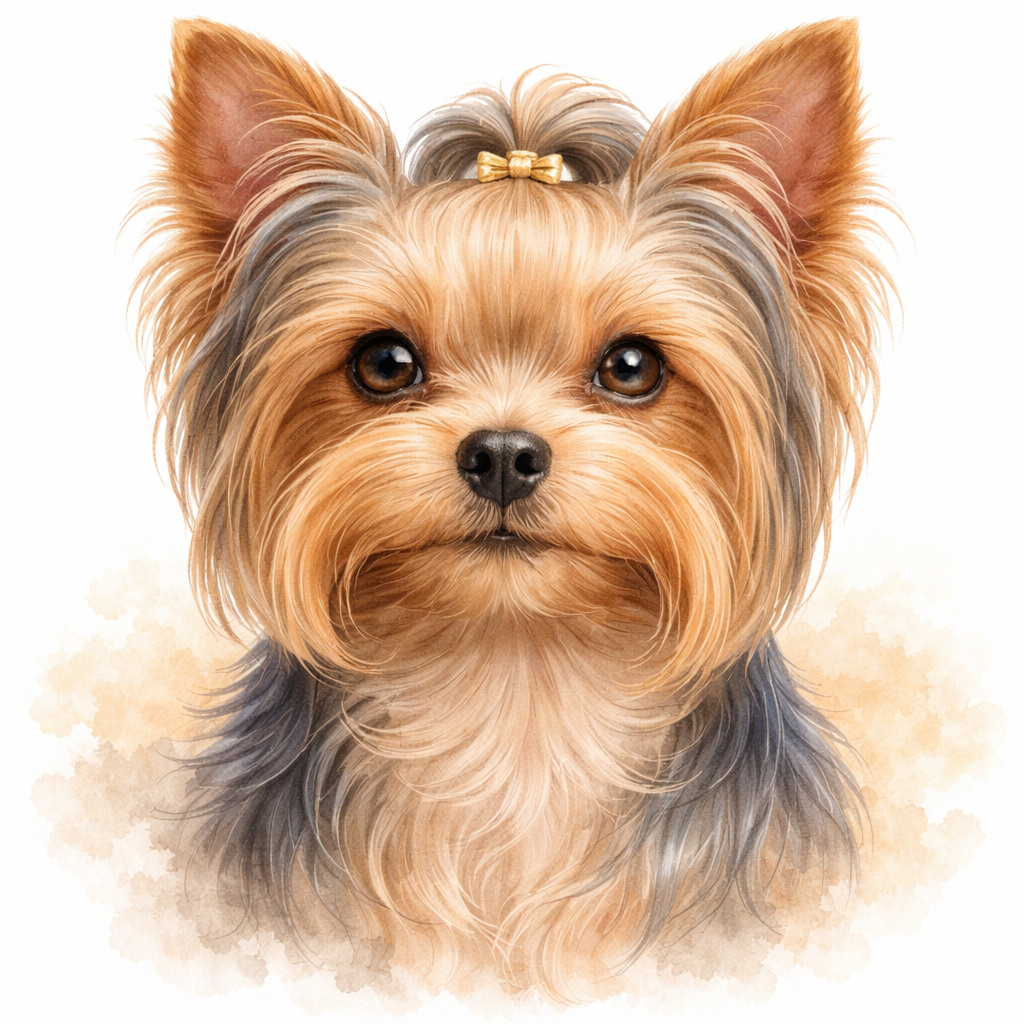
Per the AKC breed standard, Yorkshire Terriers should not exceed 7 lbs (approximately 3.2 kg). The breed is defined by its silky, fine, human hair-like coat in a precise steel blue and tan coloration: the body from neck to tail should be a dark steel blue (not silver or black), with a rich tan on the face, ears, legs, and chest. Puppies are born black-and-tan; the blue color develops gradually over the first one to two years. The coat is a single layer, meaning Yorkies shed minimally — a significant practical advantage for allergy-prone households.
The characteristic V-shaped erect ears and the confident, self-assured posture belie the breed’s small frame. Despite weighing just a few pounds, a well-bred Yorkie carries itself with the bearing of a much larger dog — a quality the AKC standard captures in its description of the Yorkie as having a “carriage very upright and conveying an air of importance.”
Temperament & Personality
The Yorkshire Terrier’s personality is dominated by its terrier heritage far more than its size would suggest. Terriers were bred to work independently, to make quick decisions, and to pursue prey into burrows where no handler could follow. These traits translate, in a companion context, into a dog that is curious, assertive, and tenacious — one that is highly engaged with its environment and rarely misses anything happening around it.
Yorkies are affectionate and loyal to their families, often forming a particularly intense bond with one person. They enjoy being close to their preferred human and will follow them from room to room. This devotion can tip into separation anxiety if the dog does not learn from puppyhood that alone time is safe and temporary.
The breed’s terrier pluck means Yorkies have little concept of their own small size. They will challenge dogs many times their weight and have no instinctive fear of larger animals. This fearlessness is endearing but requires management — a Yorkie that runs at a large dog or charges into traffic has no defense against the consequences of being tiny. On-leash control and careful supervision in off-leash environments are non-negotiable.
Vocality is a terrier hallmark, and Yorkies are no exception. They are alert to environmental changes — door knocks, passing footsteps, delivery trucks — and will announce these events reliably. Teaching a “quiet” cue from early puppyhood and rewarding calm behavior in the presence of triggers helps channel this watchdog instinct without allowing it to become a nuisance.
Training Yorkies requires patience and consistency. They are intelligent and can learn a wide range of commands and tricks, but they also have a strong sense of self-determination. The most effective approach is short, frequent training sessions (5–10 minutes) built around high-value food rewards and enthusiastic praise. Avoiding the common pattern of “small dog syndrome” — where owners excuse misbehavior because the dog is small — is perhaps the most important training principle for the breed.
Health & Lifespan
Yorkshire Terriers live 13 to 16 years on average, making them one of the longer-lived toy breeds. Their small size comes with some specific health vulnerabilities, particularly structural and metabolic conditions that prospective owners should understand.
Patellar Luxation is extremely common in Yorkshire Terriers. The AKC Canine Health Foundation lists it as the breed’s most frequently reported orthopedic condition. The kneecap shifts laterally out of its groove, causing an intermittent lameness or “bunny hopping” gait. Keeping a Yorkie lean is the single most effective preventive measure. Non-slip flooring (rugs, yoga mats) throughout the house and ramps or steps next to furniture to prevent jumping reduce joint stress considerably. Grade 3 or 4 luxation typically requires surgical correction to restore normal gait and prevent early arthritis.
Tracheal Collapse is more prevalent in Yorkshire Terriers than in most other toy breeds. The tracheal cartilage rings gradually lose rigidity, causing the airway to flatten during inhalation or exhalation and producing a distinctive honking or goose-like cough — often triggered by excitement, exercise, eating, or pressure on the neck. Using a harness (rather than a collar) for all walks is strongly recommended and may be the most impactful single owner action for this condition. Obesity worsens the symptoms significantly. Medical management with antitussives and bronchodilators helps in mild-to-moderate cases; severe cases may benefit from surgical placement of tracheal stents.
Portosystemic Shunt (PSS) is a congenital vascular anomaly that occurs at notably higher rates in Yorkshire Terriers than in the general dog population. An abnormal blood vessel allows blood from the intestines to bypass the liver, circulating incompletely detoxified blood throughout the body. Affected puppies may show poor growth, post-meal confusion or wobbling, seizures, or urinary tract abnormalities. A pre-breeding bile acid test identifies affected dogs before symptoms become severe. Surgical correction is possible and often curative; medical management is an alternative when surgery is not feasible.
Dental disease is a serious quality-of-life and longevity concern in Yorkshire Terriers. The combination of a very small mouth, crowded dentition, and the breed’s tendency to retain baby teeth creates conditions for rapid plaque and tartar accumulation. Periodontal disease leads to systemic inflammation that affects the heart, kidneys, and liver over time. Daily tooth brushing with a canine-formulated toothpaste, annual professional dental cleanings under anesthesia, and appropriate dental chews form the foundation of oral care for this breed. Owners who commit to this routine consistently report healthier, longer-lived dogs.
Frequently Asked Questions
Q: What is the average lifespan of a Yorkshire Terrier?
The Yorkshire Terrier has an average lifespan of 13–16 years, with a median around 14 years — one of the longer lifespans among dog breeds. Daily dental care, a harness instead of a neck collar to protect against tracheal collapse, and regular veterinary checkups are the most important factors in supporting a long, healthy life.
Q: Is a Yorkshire Terrier good for first-time owners?
The Yorkshire Terrier can be a good choice for first-time owners in apartments or smaller homes who want an alert, affectionate companion. The breed is intelligent and trainable, though first-time owners should be prepared for its bold Terrier personality, the need for regular professional grooming, and the critical importance of daily dental brushing to prevent the serious periodontal disease this breed is prone to.
Q: How much does it cost to own a Yorkshire Terrier per month?
Owning a Yorkshire Terrier typically costs $65–115 per month. Budget roughly $25–40 for food, $25–45 for pet insurance, and $15–30 for supplies and dental care. Professional grooming every 4–6 weeks is a significant recurring expense for maintaining the Yorkshire Terrier’s long, silky coat.