History & Characteristics
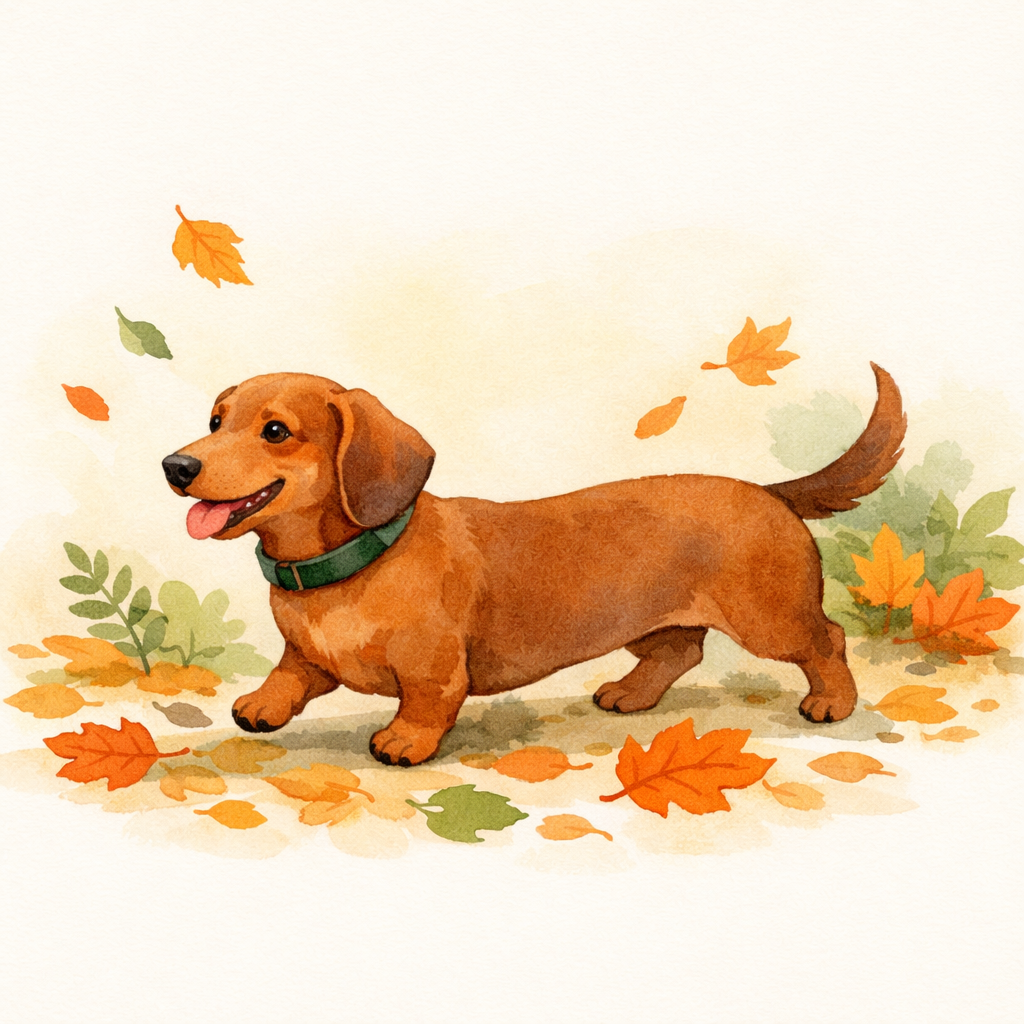
The Dachshund is one of the most recognizable dog breeds in the world, and the story behind its singular silhouette is rooted in function. The name itself is German for “badger dog” (Dachs = badger, Hund = dog), and the breed was deliberately engineered over several centuries to enter the underground burrows of badgers, foxes, and other quarry and either flush or dispatch them. Documentary evidence of short-legged, long-bodied hunting dogs appears in German texts as early as the 15th century.
By the 17th and 18th centuries, German foresters had refined the breed into a confident, fearless specialist capable of working both above and below ground. The three coat varieties — smooth, longhaired, and wirehaired — each developed to suit different hunting environments and terrain types. The wirehaired Dachshund, developed through crosses with terriers and hard-coated breeds, brought additional tenacity and weather resistance. Queen Victoria’s well-documented fondness for the breed helped introduce Dachshunds to British households in the 19th century, from which they spread rapidly across the English-speaking world.
The AKC recognizes two size varieties: the standard Dachshund (typically 16–32 pounds) and the miniature (11 pounds and under). The miniature variety is by far the more common companion dog in the United States. The breed’s distinctive profile — deep chest, long back, and charmingly short legs — has earned it the affectionate nicknames “sausage dog” and “wiener dog” in English-speaking countries.
In coat type, the smooth Dachshund is the most common and lowest maintenance. The longhaired variety has a silky, slightly wavy coat that requires regular brushing, while the wirehaired coat has a harsh, bristly outer layer that ideally requires hand-stripping to maintain correct texture. Coat colors span an impressive range, including red, black and tan, chocolate and tan, dapple (merle), and brindle.
Temperament & Personality
Dachshunds possess a personality that regularly surprises owners who expect a docile lapdog. Bred for generations to work independently in tunnels without human oversight, the Dachshund has a self-reliant, curious, and occasionally stubborn streak that sets it apart from many companion breeds. The AKC breed standard characterizes the Dachshund as “clever, lively, and courageous to the point of rashness,” which is an accurate summary.
Their hunting origins manifest in several predictable ways. Dachshunds have exceptional noses and are highly motivated to follow scent trails. Off-leash recall in an unenclosed area is genuinely unreliable — when a scent captivates a Dachshund, the sound of their owner’s voice simply does not register. A securely fenced yard is a requirement, and leash discipline in public spaces is essential.
Barking is another breed trait owners should anticipate. Dachshunds are naturally vocal and will alert to any unusual sound or visitor with considerable enthusiasm. Early training and consistent correction can moderate this tendency, but prospective owners in apartments or densely populated neighborhoods should be realistic about managing it.
Despite their independent spirit, Dachshunds are deeply affectionate and bond strongly with their family. They often select a favorite person and follow them throughout the day, and they genuinely enjoy snuggling under blankets or in laps. The three coat varieties are sometimes said to differ slightly in temperament — smooth-coated dogs tending toward the most energetic and outgoing, longhaired toward the calmer and more gentle, and wirehaired toward the most mischievous and terrier-like — though individual variation is substantial.
Dachshunds are generally good with children who treat them respectfully, but they have a lower tolerance for rough handling than many larger breeds. Multi-dog households can work well, particularly with other Dachshunds. Early socialization reduces the breed’s tendency toward wariness with unfamiliar dogs.
Health & Lifespan
The Dachshund enjoys an average lifespan of approximately 14.7 years, making it one of the longer-lived breeds relative to its popularity. However, the breed’s iconic body plan comes with a well-documented vulnerability to spinal problems that every owner must understand and actively manage.
Intervertebral disc disease (IVDD) is the defining health challenge for Dachshunds. The breed is chondrodystrophic — meaning the cartilage in its intervertebral discs ages and calcifies abnormally early — and the long spinal column amplifies the mechanical stress on those discs. Studies suggest that approximately 25% of Dachshunds will experience at least one IVDD episode in their lifetime. The condition most commonly affects dogs between 3 and 7 years of age, and symptoms can range from localized back pain and reluctance to move, to sudden-onset rear leg paralysis. Early-stage cases may be managed with strict crate rest and anti-inflammatory medication; more severe cases require surgical decompression.
Prevention is highly actionable. The single most important steps are weight management and environmental modification: ramps or steps to furniture and beds (eliminating the need to jump), non-slip flooring throughout the home, and correct two-handed lifting technique (one hand under the chest, one supporting the hindquarters) are non-negotiable for Dachshund owners. Maintaining a healthy weight reduces spinal loading substantially — even modest excess weight meaningfully increases IVDD risk.
Progressive retinal atrophy (PRA) is a hereditary condition in which the retina gradually degenerates, beginning with impaired night vision and eventually leading to complete blindness. A DNA test is available, and responsible breeders screen their breeding dogs to avoid producing affected offspring. There is no cure for PRA, but DNA-clear dogs will not be affected.
Diabetes mellitus occurs at a higher rate in Dachshunds than in many other breeds, and obesity is a major predisposing factor. Maintaining a lean body condition throughout the dog’s life — which requires consistent portion control given the breed’s legendary food motivation — is the most effective preventive measure for both IVDD and diabetes.
Frequently Asked Questions
Q: What is the average lifespan of a Dachshund?
The Dachshund has an average lifespan of 12–16 years, with a median around 14.7 years — one of the longer lifespans among dog breeds. Their longevity is best supported by strict weight management and environmental modifications that protect their uniquely vulnerable spine from IVDD.
Q: Is a Dachshund good for first-time owners?
The Dachshund can be a good fit for first-time owners who are prepared for the breed’s stubborn streak and understand its specific physical needs. Consistent positive reinforcement training, strict weight management, and home modifications to prevent jumping are essential habits from the start, but the breed’s affectionate, playful nature makes it a rewarding companion.
Q: How much does it cost to own a Dachshund per month?
Owning a Dachshund typically costs $65–115 per month. Budget roughly $25–40 for food, $25–45 for pet insurance (strongly recommended given the breed’s high IVDD risk), and $15–30 for supplies and ramps or furniture steps. IVDD treatment can be extremely costly if it occurs, making insurance particularly valuable for this breed.