History & Characteristics
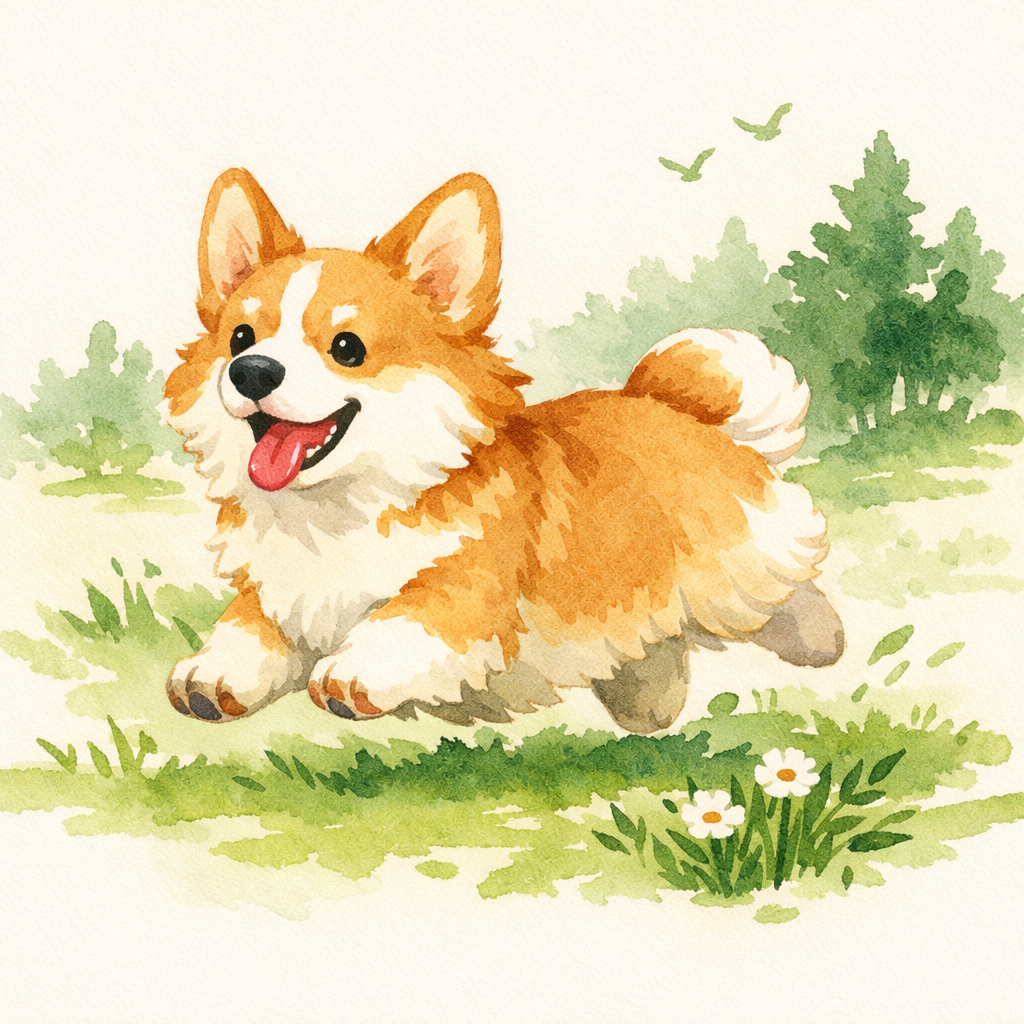
The Welsh Corgi comes in two distinct AKC-recognized varieties: the Pembroke Welsh Corgi and the Cardigan Welsh Corgi. While they share a name, a homeland, and a general body plan, they have separate breed histories and the AKC treats them as entirely distinct breeds. The Pembroke — instantly recognizable as the beloved companion of Queen Elizabeth II — is by far the more popular of the two in North America.
The Cardigan’s history is the older of the two. According to the Cardigan Welsh Corgi Club of America, Cardigans are among the oldest breeds in the British Isles, potentially descended from dogs brought to Wales by Celtic tribes around 1200 BCE. The Pembroke has a comparatively recent history; the Pembroke Welsh Corgi Club of America notes that Flemish weavers brought their own herding dogs to Wales in the 10th century, and those dogs crossed with existing Welsh herding stock to produce the Pembroke type.
Both varieties were developed to herd cattle in the rocky, hilly terrain of Wales using a technique called “heeling” — nipping at the heels of cattle to move them forward, staying low to the ground to avoid kicks. The achondroplastic (short-legged) body is a deliberate functional adaptation rather than a quirk: a Corgi’s low center of gravity and short legs allow it to duck under the arc of a cow’s kick.
Per the AKC breed standard, Pembroke Welsh Corgis weigh up to 30 lbs (14 kg) for males and 28 lbs (13 kg) for females, with a low-set, long body, erect “bat” ears, and either a natural bobtail or a docked tail. Common colors include red, sable, fawn, and black-and-tan, typically with white markings. The Cardigan is slightly heavier, has a long fox-like tail, and additionally comes in brindle and blue merle. Both varieties have a weather-resistant double coat that sheds heavily, particularly in spring and fall.
Queen Elizabeth II’s lifelong affection for Pembroke Welsh Corgis — she owned more than 30 during her reign — elevated the breed to global celebrity status. The Crown and numerous media appearances have ensured that the Pembroke remains one of the most recognized breeds worldwide.
Temperament & Personality
Despite their compact size, Corgis are emphatically not lapdog material. The AKC describes the Pembroke Welsh Corgi as “bold, but kindly” — a herding dog’s intensity packed into a manageable frame. Corgis are athletic, alert, and opinionated, and they bring all the demands of a herding breed in terms of mental and physical stimulation needs.
Intelligence is a defining Corgi trait. In Coren’s canine intelligence rankings, the Pembroke places 11th and the Cardigan places 26th — both well within the “excellent working dogs” category. This means Corgis learn quickly, adapt well, and are highly motivated by task-oriented activities. It also means they can develop creative mischief when under-stimulated.
The herding instinct in Corgis is very much alive in family settings. Without livestock to manage, a Corgi will often “herd” children, houseguests, or other pets by nipping at heels or circling them. This behavior must be redirected from the beginning through consistent training and the provision of appropriate outlets — herding balls, structured play, and obedience work all channel these instincts productively.
Corgis are enthusiastic eaters and will eat until ill if given the opportunity. Food-motivated training is extremely effective with this breed, but the same trait makes obesity a constant management challenge. Corgis are not self-regulating around food; portion control and limiting treats to within the daily caloric budget are responsibilities that fall entirely on the owner.
Health & Lifespan
Welsh Corgis live an average of 12 to 15 years. Their unique conformation creates specific health vulnerabilities that all Corgi owners should understand and actively manage.
Intervertebral Disc Disease (IVDD) is the most significant health concern in the breed. The Corgi’s long spine and disproportionately short legs create mechanical stress on the spinal column that does not exist in typically proportioned dogs. The intervertebral discs — cartilaginous cushions between the vertebrae — are prone to premature degeneration and herniation. A herniated disc can compress the spinal cord, causing anything from localized back pain to complete hind limb paralysis. Prevention requires a lifetime commitment: body weight must remain lean (excess fat dramatically increases spinal load), access to stairs should be restricted or eliminated, and jumping from furniture must be prevented using ramps or steps. Any sudden change in gait, reluctance to move, crying when touched on the back, or loss of hind limb coordination is a veterinary emergency.
Degenerative Myelopathy (DM) is a progressive neurological disease with a particularly high prevalence in Pembroke Welsh Corgis. The CHIC (Canine Health Information Center) program mandates a DNA test for DM risk status for all Corgis seeking CHIC certification. Dogs identified as “At Risk” (homozygous for the mutation) are significantly more likely to develop the disease, which typically begins with hindquarter weakness around age 8 and advances to complete hind limb paralysis over two to three years. There is no treatment that halts progression, but structured physical rehabilitation — particularly water treadmill therapy — can meaningfully extend functional mobility.
Hip Dysplasia is addressed through OFA hip evaluations for breeding stock. For companion dogs, maintaining lean body weight and providing low-impact exercise (swimming is ideal) are the most valuable interventions.
Routine preventive care for Corgis includes consistent dental hygiene (they are prone to tartar accumulation), regular brushing and deshedding (the double coat sheds heavily), and annual wellness exams. Given the spine-specific risks, every Corgi owner should have a relationship with a veterinarian who is familiar with chondrodystrophic breeds and knows the warning signs of acute disc herniation.
Frequently Asked Questions
Q: What is the average lifespan of a Welsh Corgi?
The Welsh Corgi has an average lifespan of 12–15 years, with a median around 13.3 years. The breed’s long-backed, short-legged build creates risks for IVDD and degenerative myelopathy, making weight management and spine-protective environmental modifications especially important throughout the dog’s life.
Q: Is a Welsh Corgi good for first-time owners?
The Welsh Corgi is a good choice for first-time owners who are active and want a trainable, affectionate herding breed in a manageable size. The breed is highly intelligent and eager to please, though owners should be prepared for its herding instincts around children and pets, substantial shedding, and the need to prevent jumping to protect the spine.
Q: How much does it cost to own a Welsh Corgi per month?
Owning a Welsh Corgi typically costs $85–145 per month. Budget roughly $35–55 for food, $30–50 for pet insurance, and $20–40 for supplies. The breed’s double coat sheds heavily and benefits from regular professional deshedding, adding to grooming costs particularly in spring and fall.