History & Characteristics
Despite its name, the Australian Shepherd is an entirely American breed. The most widely accepted origin story traces its ancestry to Basque shepherds who herded sheep in the Pyrenees between Spain and France, eventually emigrating with their dogs through Australia to the American West Coast during the 19th century. American ranchers, seeing the dogs arrive with Australian sheep, began calling them “Australian Shepherds,” and the name stuck.
The breed was shaped by the demands of American ranching. On the vast, rugged ranges of the Western United States, these dogs needed to be athletic, tireless, versatile, and intelligent enough to work independently when necessary. They became fixtures at rodeos and horse shows, where their flashy herding demonstrations and trick-performing earned them a devoted following beyond the farming community. The AKC formally recognized the Australian Shepherd in 1993, placing it in the Herding Group.
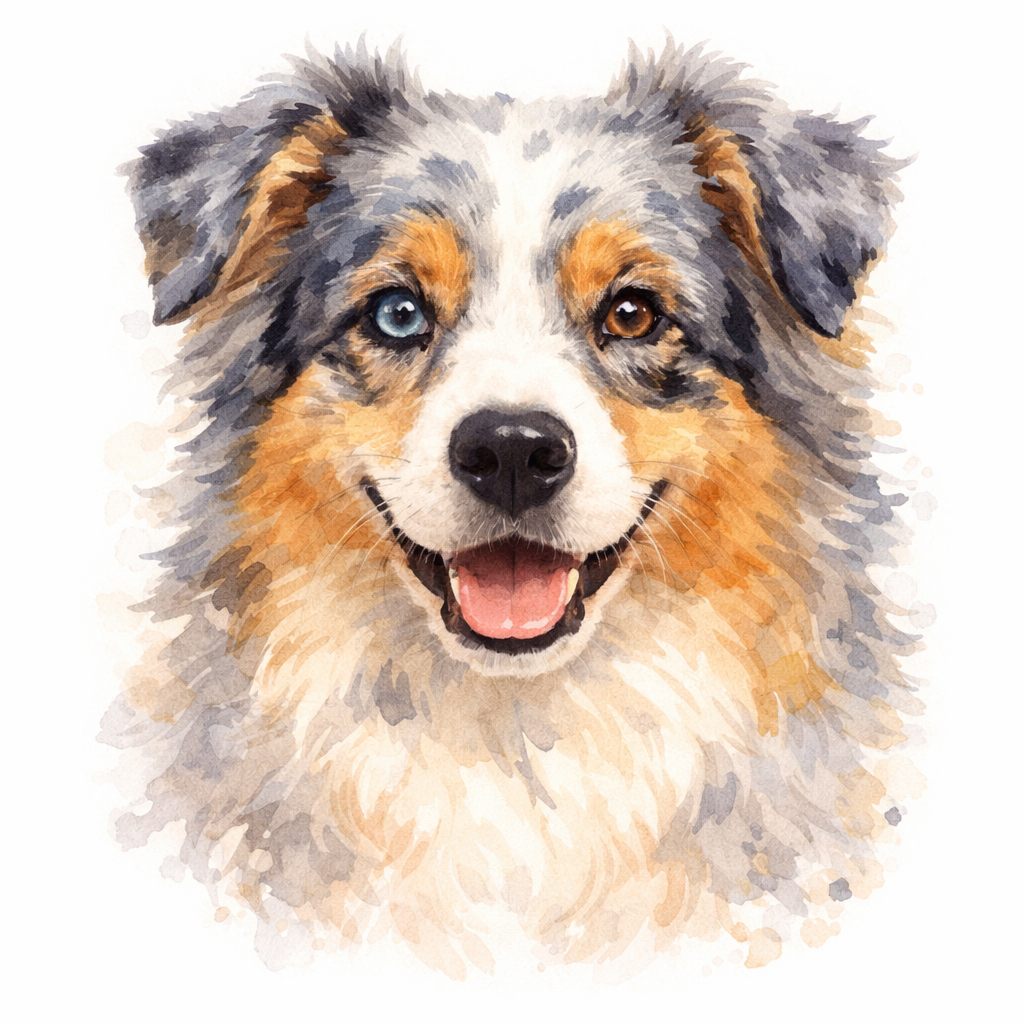
Today, Aussies consistently rank among the most popular breeds in the United States. They are a medium-sized, well-muscled dog weighing 18–29 kg (40–65 lbs) with a height of 18–23 inches at the shoulder. What immediately sets the Australian Shepherd apart visually is its coat: a medium-length weather-resistant double coat that comes in four base color patterns — blue merle, red merle, black, and red — all of which may include white and copper (tan) markings. The merle patterning, a mottled, marbled coat of mixed colors, is particularly striking and uncommon in other breeds. Eye color is equally variable: Aussies may have brown, blue, amber, or hazel eyes, and heterochromia (two different colored eyes) or marbled eyes (multiple colors within one iris) are not rare. Many Aussies are born with a naturally bobbed tail.
Temperament & Personality
The Australian Shepherd is, above all else, a working dog at heart. Even generations removed from the ranch, an Aussie’s herding instincts run deep. The breed is highly intelligent — ranking among the top working breeds in Stanley Coren’s “The Intelligence of Dogs” — and learns new commands with remarkable speed. This intelligence is both the breed’s greatest asset and its greatest demand: an understimulated Aussie will find its own ways to stay busy, and those ways may not align with what the owner had in mind.
Aussies are devoted, affectionate companions within the family. They are often described as “velcro dogs” because of how closely they follow their people from room to room. They are highly emotionally attuned and will pick up on stress, sadness, or excitement in their owners. With strangers, Australian Shepherds tend to be somewhat reserved initially, taking their time to warm up rather than rushing in for immediate greetings — a trait that reflects their watchdog heritage.
The herding instinct is alive in most Aussies and can express itself in ways that require management in family settings. The breed may attempt to “herd” running children, other pets, or even adults by nipping at heels, circling, or using its body to nudge. These behaviors are not aggressive but stem from deeply ingrained instinct. Early training and redirection are important tools for households with young children or smaller animals.
Australian Shepherds are not a breed for owners seeking a low-maintenance companion. They thrive when given a job — whether that is competitive agility, frisbee, herding trials, search and rescue work, or even complex trick training. Without sufficient mental and physical outlets, the Aussie’s energy can tip over into destructive behaviors including excessive barking, chewing, and fence-pacing.
Health & Lifespan
The Australian Shepherd is a relatively long-lived breed with an average lifespan of 13–15 years, averaging approximately 14 years — exceptional for a medium-large dog. This longevity reflects the breed’s healthy working dog constitution, but several genetic conditions require attention from responsible owners and breeders.
Hip Dysplasia affects Australian Shepherds with moderate frequency. Because Aussies are athletic and physically demanding dogs, joint integrity is particularly important to their quality of life. OFA (Orthopedic Foundation for Animals) hip and elbow evaluations of breeding dogs help reduce the prevalence of this condition. Maintaining a lean body weight throughout the dog’s life — especially during the growth phase — significantly reduces the load on developing and aging joints.
Epilepsy, particularly idiopathic epilepsy (seizures without an identifiable underlying cause), is reported at a higher-than-average rate in Australian Shepherds. Onset typically occurs between 1–5 years of age. Seizures can range from mild focal events to full tonic-clonic episodes with loss of consciousness. Anti-epileptic medication manages most cases effectively, though dogs on long-term treatment require regular blood monitoring to check drug levels and liver function.
Cataracts with a hereditary basis have been documented in the breed. Annual ophthalmic evaluations through a board-certified veterinary ophthalmologist are recommended. Surgical treatment is available for cataracts that progress to significantly impair vision.
A critical health consideration specific to Australian Shepherds and several other herding breeds is the MDR1 (ABCB1) gene mutation. Approximately 50% of Australian Shepherds carry this mutation, which impairs the blood-brain barrier’s ability to exclude certain drugs. Affected dogs can have severe and potentially fatal neurological reactions to medications that are safe in other breeds, including ivermectin (used in some dewormers and heartworm preventives), loperamide (an anti-diarrheal), and several chemotherapy drugs. Genetic testing for MDR1 status is strongly recommended before any Aussie receives these compounds. Inform every veterinarian who treats your dog about the MDR1 risk in this breed.
Frequently Asked Questions
Q: What is the average lifespan of an Australian Shepherd?
The Australian Shepherd has an average lifespan of 13–15 years, with a median around 14 years — exceptional for a medium-to-large breed. This longevity reflects the breed’s healthy working dog constitution, and with proper exercise, nutrition, and veterinary care, many Aussies thrive well into their mid-teens.
Q: Is an Australian Shepherd good for first-time owners?
The Australian Shepherd is generally not recommended for first-time owners unless they are highly active and committed to providing extensive mental and physical stimulation. This breed is highly intelligent, intensely energetic, and prone to developing destructive behaviors if under-stimulated — requiring at least two hours of active, engaged exercise and mental activity daily.
Q: How much does it cost to own an Australian Shepherd per month?
Owning an Australian Shepherd typically costs $85–145 per month. Expect to spend roughly $35–55 on food, $30–50 on pet insurance, and $20–40 on supplies and grooming. The breed’s high activity level may also add costs for dog sports participation, training classes, or dog daycare.