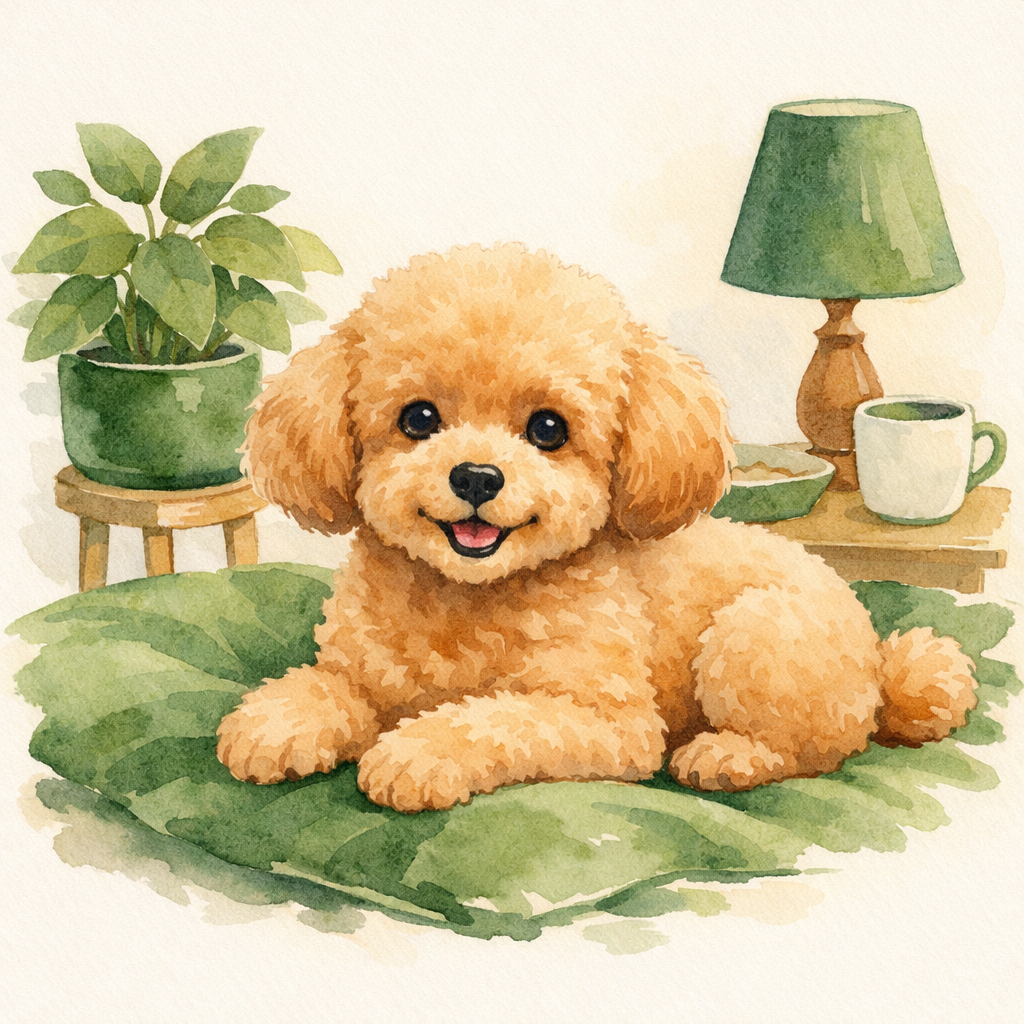
History & Characteristics
Despite being placed in the AKC Toy Group, the Poodle’s history is anything but ornamental. The breed originated in Germany as a skilled waterfowl retriever — “Pudel” is derived from the German word Pudeln, meaning to splash in water — and was subsequently refined in France into the elegantly groomed companion we recognize today. France adopted the Poodle so enthusiastically that it became the country’s national dog.
The Toy Poodle is the smallest of four size varieties (Standard, Medium/Moyen, Miniature, and Toy) recognized within the Poodle breed. The AKC defines the Toy as standing 10 inches or under at the shoulder. All size varieties share identical conformation standards; the only difference is scale. This means the Toy Poodle carries the same athletic intelligence and working heritage as the 60-pound Standard.
The breed’s characteristic coat is a single-layer, densely curled texture that grows continuously rather than shedding in seasonal cycles. This quality makes Poodles one of the most hypoallergenic options available — significantly less dander is released into the environment than with typical double-coated breeds. The tradeoff is that the coat requires professional grooming every four to six weeks and daily brushing at home to prevent matting. The AKC recognizes Toy Poodles in a wide array of solid colors including black, white, apricot, red, silver, blue, café au lait, cream, and brown.
The iconic Poodle clips — Continental, English Saddle, and Sporting — seen in the show ring were not invented for aesthetics alone. The original retriever trim protected the joints and vital organs from cold water while reducing drag on the body during swimming.
Temperament & Personality
Toy Poodles are ranked second in canine intelligence by psychologist Stanley Coren, whose research assessed over 100 breeds on working and obedience intelligence. In practical terms, this means Toy Poodles typically learn new commands in five repetitions or fewer and comply on the first cue more than 95% of the time. This is not just book-smart intelligence — Poodles are also emotionally perceptive, reading their owner’s mood and body language with uncommon accuracy.
This sensitivity is a double-edged quality. In a stable, consistent household, it allows a Toy Poodle to be an extraordinarily attuned companion. In a chaotic or unpredictable environment, it can manifest as anxiety, excessive barking, or clinginess. Positive reinforcement training works spectacularly with Toy Poodles — they thrive on the mental engagement of learning and the social reward of pleasing their handler.
Toy Poodles are highly sociable with both familiar and unfamiliar people when properly socialized from puppyhood. They generally get along well with other dogs and can coexist with cats. Their playfulness remains well into adulthood and old age, making them delightful long-term companions for active families. At the same time, their small size and sometimes sensitive nature means very young children should be supervised around them.
One of the most common issues in the breed is “small dog syndrome” — a pattern of demanding, pushy behavior that develops when owners treat a small dog differently than a larger dog would be treated. Toy Poodles should be expected to walk on a leash without being carried everywhere, wait for meals, and respond to basic obedience commands. Consistent, kind expectations from the start prevent many behavioral problems.
Health & Lifespan
The Toy Poodle is one of the longest-lived dog breeds in the world, with a typical lifespan of 14 to 17 years and documented cases of individuals reaching 20. This exceptional longevity is paired with a generally robust constitution, though several hereditary conditions require proactive management.
Patellar Luxation affects Toy Poodles at high rates, as it does most toy breeds. The AKC Canine Health Foundation recommends OFA patellar evaluation for all breeding Toy Poodles. For pet owners, the most impactful preventive measures are maintaining a lean body weight, covering slippery floors with rugs or yoga mats, and placing ramps or steps next to furniture to eliminate jumping from height. Grades 1–2 luxation rarely requires surgery; grades 3–4 typically do.
Otitis Externa is largely a structural inevitability of the Poodle’s anatomy — the combination of pendulous ears and hair that grows from within the ear canal creates ideal conditions for infection. A veterinarian or groomer should remove the hair from the ear canal at every grooming appointment. Weekly home cleaning with a veterinarian-approved ear solution keeps bacteria and yeast from establishing.
Progressive Retinal Atrophy (PRA-prcd) is a well-characterized hereditary blindness in Toy Poodles. A DNA test identifies whether a dog is Clear, Carrier, or Affected. Responsible breeders test all breeding stock; ask to see documented results when purchasing a puppy. Carriers can be bred to clear dogs without producing affected offspring. There is currently no treatment, but affected dogs adapt well to life with reduced vision over time.
Additional conditions to be aware of in Toy Poodles include Legg-Calvé-Perthes disease (avascular necrosis of the femoral head, causing rear limb lameness in young dogs), epilepsy, Cushing’s disease (hyperadrenocorticism, more common in middle-aged to older Poodles), and dental disease. On the dental front, Toy Poodles are among the breeds most prone to periodontal disease due to their small mouths and crowded dentition; daily tooth brushing and professional cleanings are genuinely important for longevity in this breed, not merely cosmetic maintenance.
Frequently Asked Questions
Q: What is the average lifespan of a Toy Poodle?
The Toy Poodle has an average lifespan of 14–17 years, with a median around 15.2 years — one of the longest lifespans of any dog breed. Daily dental care, professional grooming every 4–6 weeks, and regular veterinary checkups are the key habits that help this intelligent breed reach its full life expectancy.
Q: Is a Toy Poodle good for first-time owners?
The Toy Poodle is an outstanding choice for first-time owners — it is highly intelligent, eager to please, and excels at learning tricks and commands with positive reinforcement. The breed adapts well to apartments and various living situations, though owners must commit to consistent dental care and professional grooming every 4–6 weeks to maintain the characteristic curly coat.
Q: How much does it cost to own a Toy Poodle per month?
Owning a Toy Poodle typically costs $65–115 per month. Budget roughly $25–40 for food, $25–45 for pet insurance, and $15–30 for supplies and dental products. Professional grooming every 4–6 weeks is an important recurring expense, typically adding $50–80 per appointment to the overall monthly cost.