History & Characteristics
Few dog breeds carry a history as dramatic as the Siberian Husky. Developed over thousands of years by the Chukchi people of northeastern Siberia, these dogs were indispensable partners in survival — pulling sleds across hundreds of miles of frozen tundra, serving as warm “living blankets” for children on cold nights, and providing companionship in one of the most isolated environments on earth. The Chukchi selected selectively for endurance, efficiency, and a cooperative temperament, producing a dog that could travel vast distances on minimal food.
The breed gained international fame during the 1925 serum run to Nome, Alaska — a diphtheria outbreak threatened the isolated town in the dead of winter, and a relay of sled dog teams, primarily Siberian Huskies, carried life-saving antitoxin over 674 miles in just over five days. The lead dog Balto became a national hero, immortalized in a bronze statue in New York’s Central Park. A less-celebrated but equally critical dog named Togo covered the longest and most dangerous leg of the journey.
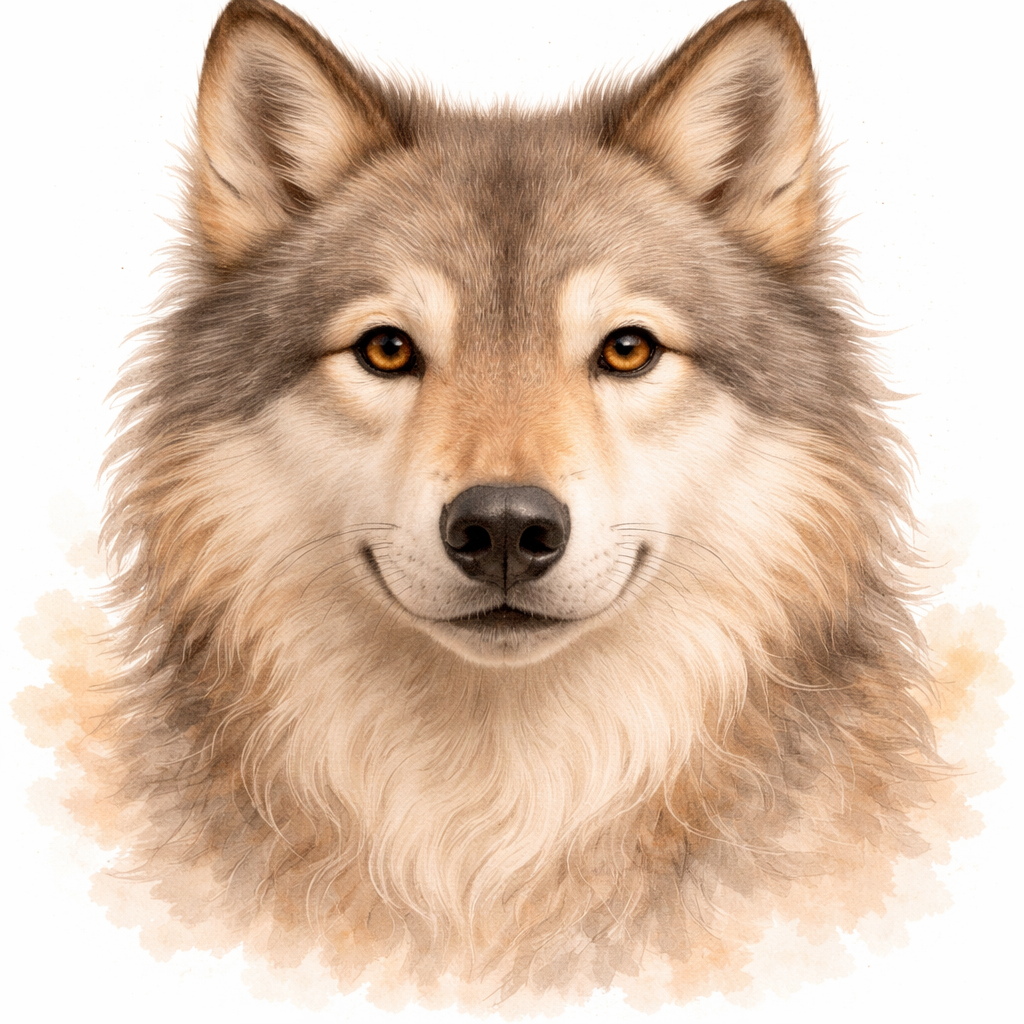
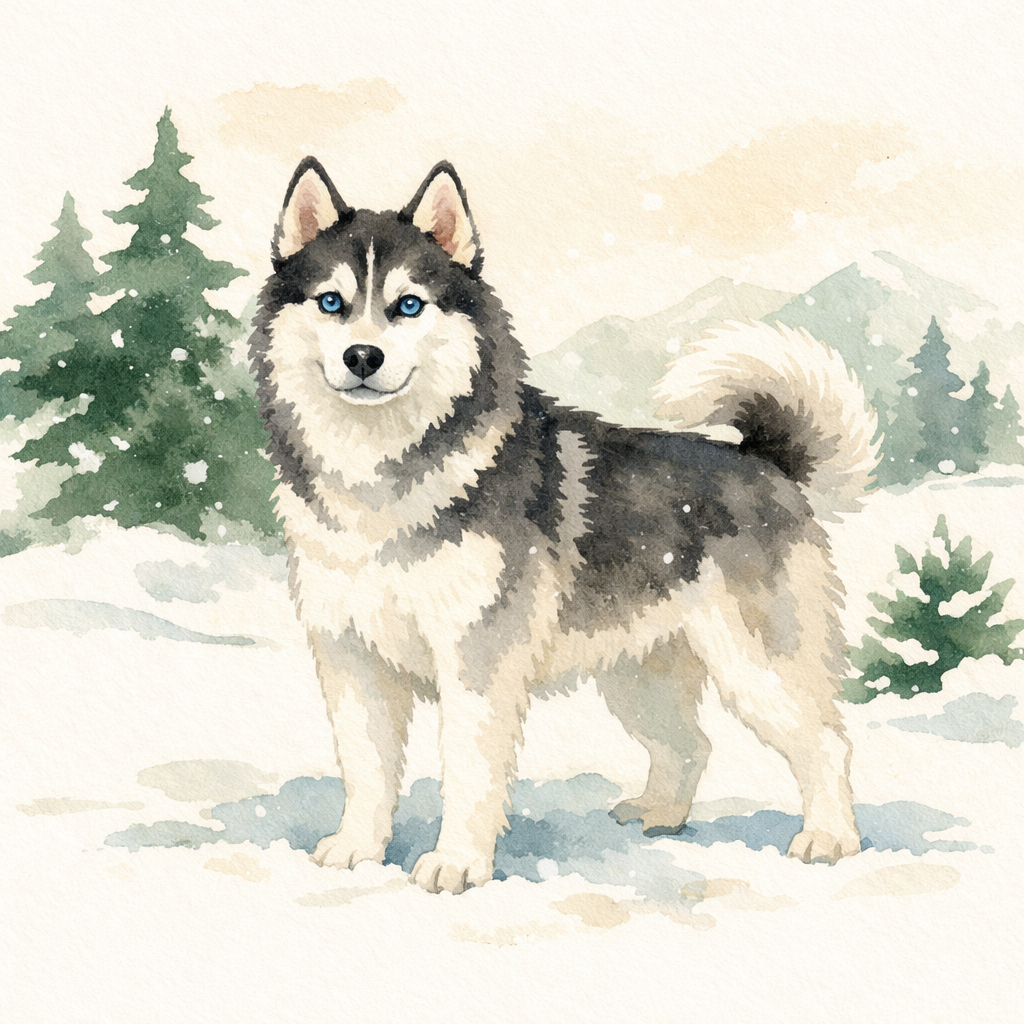
The AKC recognized the Siberian Husky in 1930. Per the breed standard, males weigh 45–60 lbs (20–27 kg) and females 35–50 lbs (16–23 kg), with a medium build that conveys both grace and power. The breed’s most striking feature is the eye color variation: brown, blue, parti-colored (split eye), or one of each (complete heterochromia). The thick double coat comes in all colors from pure white to jet black, and the characteristic facial mask adds to the breed’s wolf-like mystique.
The Siberian Husky is registered in the AKC Working Group, a reflection of its heritage as a functional sled dog rather than a guard or livestock guardian breed.
Temperament & Personality
The AKC breed standard describes the Siberian Husky as “friendly, gentle, and outgoing.” This people-loving disposition stems directly from its origins: a Chukchi dog that was aggressive toward humans would have been a threat inside the family tent, so over generations, cooperative and friendly temperaments were consistently favored.
The result is a dog with almost no guarding instinct. Huskies are notoriously poor watchdogs — they are as likely to greet a burglar with enthusiasm as they are to alert the owner. What they do excel at is companionship, play, and cooperation. They are social animals that thrive in the company of both humans and other dogs, and they can suffer significantly from boredom and isolation.
The flip side of the Husky’s sociability is its famous independence. These dogs were bred to make decisions on the trail — a good sled dog that simply followed orders without judgment would get its team killed in a whiteout. This independent thinking can be endearing, but it also means Huskies are not naturally obedient. They respond to positive reinforcement training, but recall in an open area is genuinely unreliable; a Husky that catches a scent may vanish over the horizon. Secure fencing (minimum 6 feet, with anti-dig measures at the base) is non-negotiable.
Huskies are escape artists of remarkable creativity. They dig under fences, squeeze through surprisingly small gaps, and have been known to open latches. They communicate through howling rather than barking — a melodic, wolf-like vocalization that carries significant distance and can be triggered by sirens, music, or seemingly nothing at all.
Health & Lifespan
Siberian Huskies typically live 12 to 14 years. As a working breed with a diverse gene pool, they are relatively free of many common hereditary disorders, though several specific concerns warrant attention.
Hereditary Cataracts are the most important genetic health concern in Siberian Huskies. Unlike the age-related cataracts that eventually affect many older dogs, Husky cataracts can develop in dogs as young as 1–3 years old due to a specific genetic mutation. The AKC Canine Health Foundation and the Siberian Husky Club of America strongly recommend annual ophthalmologic exams by a board-certified veterinary ophthalmologist (CAER exam, formerly CERF) for all breeding stock. A DNA test is also available. Always request ophthalmologic exam records when purchasing a Husky puppy.
Hip Dysplasia is documented in the breed, though not at the alarming rates seen in some larger working breeds. The Orthopedic Foundation for Animals (OFA) recommends hip x-rays for all breeding dogs, and parents with “Fair” or better ratings are preferable. Keeping a Husky lean is the single most effective management tool — excess weight dramatically accelerates joint deterioration.
Zinc-Responsive Dermatosis is a condition seen almost exclusively in Nordic breeds. Affected dogs develop crusty, scaly lesions around the face and paws. Despite eating zinc-containing food, their bodies cannot absorb it adequately. Treatment with supplemental zinc (under veterinary supervision to avoid toxicity) is typically very effective, but may be required for life.
Huskies are also notable for their extraordinarily efficient metabolism. Research has shown that sled dogs activate fat-burning pathways differently from other breeds during sustained exercise, allowing them to run for hours without fatigue or metabolic stress. Practically, this means Huskies tend to maintain weight on less food than their size would suggest — but it also means that without adequate physical and mental stimulation (the AKC recommends at minimum 1–2 hours of vigorous exercise daily), they will redirect that energy into destructive behaviors. A bored Husky will redecorate your home. An exercised Husky is a calm, affectionate, wonderfully companionable family dog.
Frequently Asked Questions
Q: What is the average lifespan of a Siberian Husky?
The Siberian Husky has an average lifespan of 12–14 years, with a median around 13 years. This athletic working breed enjoys generally good health, though owners should be aware of its predisposition to progressive retinal atrophy, hip dysplasia, and zinc-responsive dermatosis, and plan for annual veterinary wellness exams.
Q: Is a Siberian Husky good for first-time owners?
The Siberian Husky is generally not recommended for first-time owners due to its high exercise demands, strong prey drive, and notorious escape artistry. The breed requires at least 1–2 hours of vigorous exercise daily, a securely fenced yard, and a patient handler experienced with independent-minded dogs to prevent destructive behaviors born from boredom.
Q: How much does it cost to own a Siberian Husky per month?
Owning a Siberian Husky typically costs $85–145 per month. Budget roughly $35–55 for food (the breed’s efficient metabolism often means lower food costs than expected), $30–50 for pet insurance, and $20–40 for supplies. Professional deshedding during the biannual coat blows and investment in secure fencing are additional recurring costs to consider.