History & Characteristics
The Samoyed takes its name from the Samoyedic peoples — semi-nomadic tribes of northern Siberia, including the Nenets, Enets, and Nganasan — who developed and relied on this breed for thousands of years. For these Arctic communities, the Samoyed was not merely a pet but an essential partner in survival. Dogs pulled sleds across frozen tundra, helped herd reindeer, flushed game during hunts, and served as living blankets for families sleeping in temperatures that plunged to extraordinary lows. The close cohabitation between Samoyed dogs and their human families — sleeping together in tents, sharing body warmth — is believed to have contributed to the breed’s exceptional social orientation and its ease around people.
In the late 19th and early 20th centuries, European and British explorers recruited Samoyeds for polar expeditions. Fridtjof Nansen, Roald Amundsen, and Ernest Shackleton all used Samoyed sled teams on their Arctic and Antarctic journeys, and the breed gained international exposure through these high-profile adventures. Dogs that returned to England from these expeditions became the foundation stock for the modern Western breeding program. The AKC recognized the Samoyed in 1906, and the breed is classified in the Working Group.
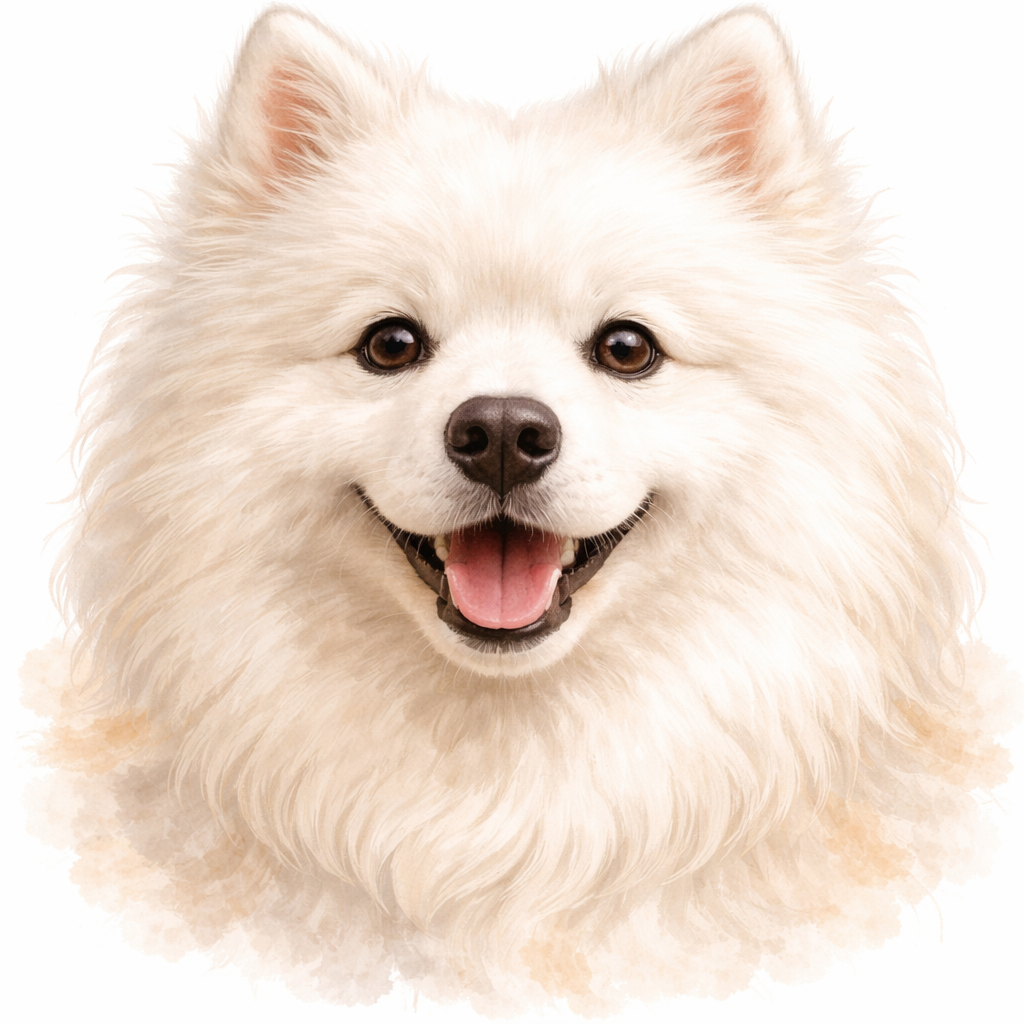
The AKC standard describes the Samoyed as a medium-large dog of Nordic type — males 21 to 23.5 inches at the shoulder and 45 to 65 pounds; females 19 to 21 inches and 35 to 50 pounds. The coat is the breed’s most celebrated feature: a profuse, glistening double coat consisting of a short, dense, woolly undercoat and a longer, harsher outercoat of straight guard hairs. The outer coat stands slightly away from the body, creating a glowing halo effect. Color is white, white and biscuit, cream, or all biscuit. Black, blue, or deep brown are disqualifying faults under the AKC standard.
The breed’s most distinctive facial feature is the “Samoyed smile” — the upturned corners of the mouth created by the lip and cheek structure. This expression is not merely charming; it is believed to be a functional adaptation that prevented drooling in the extreme cold, reducing the formation of ice around the muzzle.
Temperament & Personality
The Samoyed is frequently described as one of the most cheerful, friendly, and people-oriented of all the working breeds — a dog that maintains a puppy-like enthusiasm for life well into adulthood. Unlike some working and Nordic breeds that can be reserved or aloof with strangers, the Samoyed typically greets new people with genuine enthusiasm. This openness is a direct product of the breed’s history: centuries of living in close quarters with all members of a nomadic community produced a dog that treats humans broadly as allies and companions rather than as threats.
The Samoyed is excellent with children and generally sociable with other dogs. Its play style is typically exuberant and can be somewhat rowdy, which is why supervision with very small children is advised — the breed’s enthusiasm, not any aggression, is the concern. Some Samoyeds retain a predatory drive toward small animals, a remnant of their hunting background, and introductions to cats or rabbits should be supervised and gradual.
One critical trait to understand before bringing a Samoyed home is the breed’s strong social need. These dogs genuinely do not do well alone for extended periods. A Samoyed left in an empty house for many hours is at significant risk of developing separation-related anxiety behaviors, including excessive howling and vocalization (the Samoyed voice carries exceptionally well), destructive chewing, and escape attempts. This breed thrives in households where someone is home for most of the day, or where another dog provides company.
Trainability is moderate to good. Samoyeds are intelligent but have an independent Spitz disposition that means they will sometimes evaluate a cue and decide whether compliance seems worthwhile in the moment. Positive reinforcement with food and play is effective; repetitive drilling is not. Pulling on leash is a breed-specific challenge — these dogs were literally bred to pull — and harness-based training with consistent “heel” and “easy” cues should begin in puppyhood.
Health & Lifespan
The Samoyed has an average lifespan of 13 years with a range of 12 to 14 years, making it one of the longer-lived medium to large working breeds. Three health conditions are particularly associated with the breed.
Hip dysplasia is present in the Samoyed at a moderate rate. OFA statistics place Samoyed hip dysplasia prevalence in a similar range to other medium-large working breeds. Responsible breeders obtain OFA or PennHIP evaluations on breeding dogs, and buyers should request these results. Management follows standard protocol: lean body weight, appropriate exercise (avoid high-impact activities on hard surfaces in puppies under 18 months), and joint supplements beginning in middle age. Samoyeds that show signs of hindquarter weakness, difficulty rising, or reluctance to exercise should be evaluated promptly.
Diabetes mellitus is elevated in frequency among Samoyeds compared to the general dog population. The cause appears to be partly genetic. Signs include dramatically increased water consumption and urination, weight loss despite good appetite, and lethargy. Diabetes in dogs is typically managed with twice-daily insulin injections and dietary modifications. While this requires commitment and some learning from owners, many diabetic Samoyeds maintain a good quality of life for years with proper management. Annual bloodwork — which is advisable in all middle-aged and older dogs anyway — provides an opportunity for early detection.
Progressive retinal atrophy in Samoyeds follows the general pattern of gradual vision loss beginning with night vision difficulties and progressing over months to years. DNA testing for the X-linked Samoyed-specific PRA mutation is commercially available and allows breeders to screen reliably. Buyers should ask for PRA test results when selecting a puppy from a reputable breeder.
The Samoyed’s abundant double coat requires significant grooming commitment: brushing at least three to four times weekly during normal shedding periods and daily during the heavy seasonal blowing of coat in spring and fall. Professional deshedding sessions at those times are enormously helpful. Because the breed originates in the Arctic, it is notably heat-sensitive; access to air conditioning in summer is not optional but necessary in most climates.
Frequently Asked Questions
Q: What is the average lifespan of a Samoyed?
The Samoyed has an average lifespan of 12–14 years, with a median around 13 years. This robust working breed benefits from attentive care around its known predispositions to hip dysplasia, diabetes mellitus, and progressive retinal atrophy, along with consistent coat maintenance and access to cool environments in warm climates.
Q: Is a Samoyed good for first-time owners?
The Samoyed can work for first-time owners who are active, patient, and committed to extensive grooming. The breed is friendly, social, and trainable — but it requires substantial daily exercise, tolerates heat poorly, and sheds dramatically, which can overwhelm owners who are not fully prepared for the grooming commitment.
Q: How much does it cost to own a Samoyed per month?
Owning a Samoyed typically costs $85–145 per month. Budget roughly $35–55 for food, $30–50 for pet insurance, and $20–40 for supplies. Professional grooming and deshedding sessions — especially during the heavy biannual coat blows — add significant recurring costs that owners should budget for in advance.