History & Characteristics
The Pomeranian is a member of the Spitz family, descended from the large sled and herding dogs of the Arctic. Its immediate ancestors were considerably larger dogs from the Pomerania region — a historical territory spanning what is now northeastern Germany and northwestern Poland — where they served as working dogs on farms and estates. These original Pomeranians weighed as much as 30 pounds.
The breed’s dramatic size reduction happened primarily through the influence of the British royal family, most notably Queen Victoria. During an 1888 trip to Florence, she encountered a small Pomeranian weighing only 12 pounds and immediately began a breeding program at Windsor aimed at producing even smaller specimens. By the time of her death in 1901, the preferred show size had dropped to roughly half what it had been at the start of her reign. The breed had become fashionable not only among royalty but across all levels of British society, and this popularity spread quickly to the United States. The AKC recognized the Pomeranian in 1900, and the breed is today classified in the Toy Group.
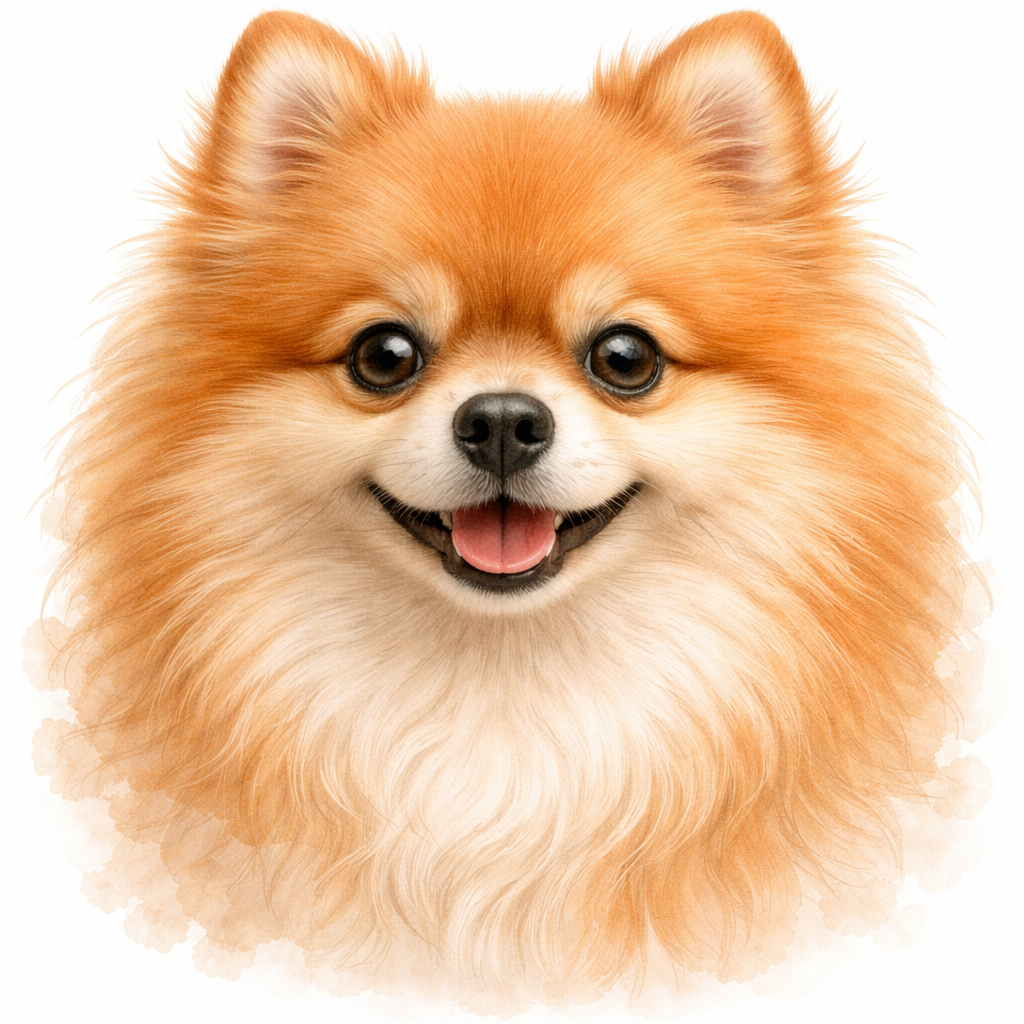
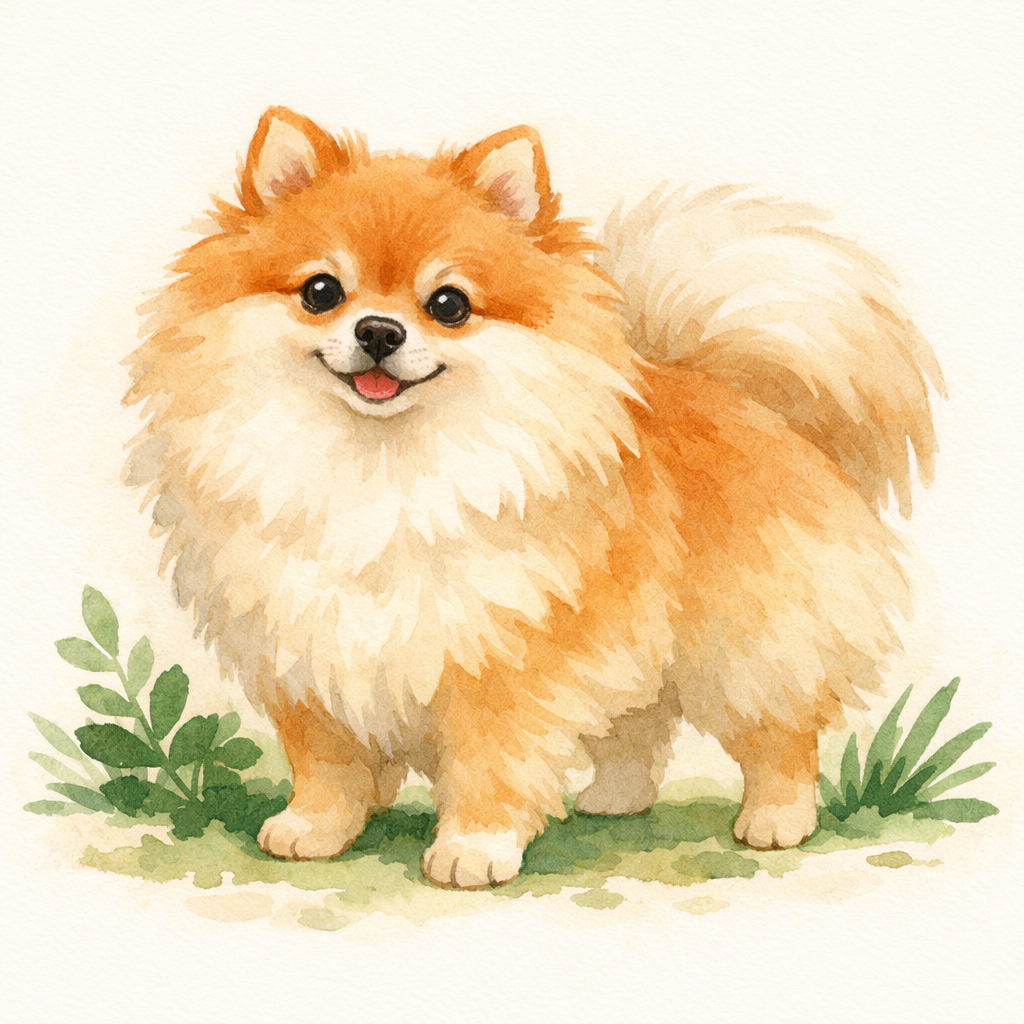
The AKC standard describes the Pomeranian as a compact, short-backed, active toy dog weighing 3 to 7 pounds. The breed’s most visually striking feature is its double coat: a long, harsh, straight outercoat and a soft, dense undercoat that together create a characteristic “puffball” profile. The neck and chest carry a heavy frill. The tail is heavily plumed and lies flat and straight over the back. Ears are small, erect, and high-set, and the expression is alert and fox-like. The Pomeranian has the most color variety of almost any breed — the AKC recognizes over 20 colors and patterns, including orange, cream, black, chocolate, blue, sable, brindle, and parti-color.
Temperament & Personality
Despite weighing just a few pounds, the Pomeranian carries itself with the self-confidence of a dog ten times its size. This is a breed that is bold, vivacious, and perpetually curious, seemingly convinced that the world revolves around it. Owners describe Pomeranians as entertaining, affectionate, and endlessly entertaining — always ready for play, always alert to what is happening, and always deeply interested in being the center of attention.
Pomeranians bond intensely with their families and are highly demonstrative in showing affection. They enjoy lap time and close physical proximity but also have a lively, active streak that drives them to explore, investigate, and play. This dual nature — cuddly yet energetic — gives the breed broad appeal across different lifestyles.
The breed’s alert nature makes it an excellent watchdog. A Pomeranian will bark to announce any approaching visitor or unusual sound, and this instinct is reliable and consistent. The challenge is controlling the volume: without appropriate training, a Pomeranian can develop habitual excessive barking that becomes disruptive in apartment living. Consistent “quiet” command training and not inadvertently rewarding barking with attention are essential from puppyhood.
In terms of trainability, Pomeranians are intelligent and learn quickly, but an independent streak means they occasionally decide their ideas are superior to yours. Short, varied training sessions with high-value rewards work best. Socialization during the critical developmental window — exposing the puppy to a wide range of people, sounds, environments, and other animals — helps prevent the excessive fearfulness or aggression toward strangers that can develop in poorly socialized individuals. Pomeranians can do well with gentle, older children, but their small size makes them vulnerable to accidental injury with very young children, and all interactions should be supervised.
Health & Lifespan
The Pomeranian is a long-lived breed, with an average lifespan of 14.3 years and a range of 12 to 16 years. Several breed-specific health concerns deserve proactive attention.
Tracheal collapse is one of the most significant health issues in Pomeranians and other small-breed dogs. The rings of cartilage that maintain the trachea’s cylindrical shape weaken progressively, causing the airway to partially flatten — particularly during inhalation. The characteristic sound is a dry, honking cough that may be triggered by exercise, excitement, drinking water, heat, or pressure on the neck from a collar. Mild cases are managed medically with cough suppressants and bronchodilators; severe or medication-resistant cases may benefit from tracheal stenting. Harnesses rather than neck collars are strongly recommended for all Pomeranians to avoid adding pressure to an already vulnerable airway. Maintaining a lean body weight reduces respiratory demand and slows progression.
Patellar luxation is common across toy breeds and is seen at elevated rates in Pomeranians. Prevention and management are the same as for other small breeds: non-slip flooring, limiting repetitive high-impact jumping, and keeping the dog at a healthy weight. Grades 3–4 generally require surgical repair.
Alopecia X — sometimes called “black skin disease” — is a poorly understood condition in Nordic breeds, including the Pomeranian. It causes bilateral, symmetrical hair loss across the trunk and may be accompanied by skin darkening. It is not painful or itchy, but the cosmetic impact is significant. The exact cause remains under investigation; hormonal factors are suspected. Spay/neuter and melatonin supplementation have produced improvement in some cases. Owners who notice large patches of hair thinning on the body should have the dog evaluated to rule out other endocrine conditions (such as hypothyroidism or Cushing’s disease) that present similarly.
Regular brushing (at least three to four times weekly, daily during seasonal shedding) maintains coat health, prevents mat formation in the dense undercoat, and provides an opportunity to check for skin abnormalities. Annual veterinary wellness exams, consistent dental care, and proper weight management form the foundation of a long, healthy Pomeranian life.
Frequently Asked Questions
Q: What is the average lifespan of a Pomeranian?
The Pomeranian has an average lifespan of 12–16 years, with a median around 14.3 years — one of the longer lifespans among dog breeds. Daily dental care, consistent coat maintenance, and protection from injury are the most important factors in helping this tiny breed reach its full life expectancy.
Q: Is a Pomeranian good for first-time owners?
The Pomeranian can be a good match for first-time owners who enjoy a bold, lively personality in a small package. The breed is alert and trainable, though it can develop a tendency toward excessive barking and small dog syndrome if not consistently trained from puppyhood — early socialization and positive reinforcement work well.
Q: How much does it cost to own a Pomeranian per month?
Owning a Pomeranian typically costs $65–115 per month. Budget roughly $25–40 for food, $25–45 for pet insurance, and $15–30 for supplies. Professional grooming every 4–6 weeks and daily dental care supplies are consistent additional expenses for this breed.