
History & Characteristics
The Labrador Retriever is the most registered dog breed in both the United States and the United Kingdom, a position it held continuously in the U.S. for 31 years (1991–2021) before being displaced by the French Bulldog. This popularity is not a modern phenomenon built on marketing — it is the earned result of a temperament and working ability that serve humans across an extraordinary range of roles, from waterfowl retrieval and search-and-rescue to guide dog work, detection, therapy, and competitive sports.
The breed’s ancestors were working dogs on the island of Newfoundland, Canada. In the early 19th century, British fishermen visiting Newfoundland observed small water dogs assisting fishermen by retrieving fish that fell off hooks and hauling in nets. These dogs — called the St. John’s Water Dog or Lesser Newfoundland — were compact, energetic, and had a short dense water-resistant coat. English sportsmen, recognizing the dogs’ exceptional retrieving abilities, imported them to the UK for use as hunting companions. Through selective breeding in England, the modern Labrador Retriever was refined, and the Kennel Club formally recognized the breed in 1903. The AKC followed in 1917.
The AKC breed standard describes the Labrador Retriever as a medium-large dog of 21.5–24.5 inches in height and 55–80 pounds in weight, with a clean-cut head, wide skull, and the characteristic “otter tail” — thick at the base and tapering toward the tip, covered with the same short dense coat as the body. The tail functions as a rudder in the water and is nearly always in motion on land. The breed is recognized in three colors: black, yellow (ranging from pale cream to rich fox-red), and chocolate. The double coat consists of a soft, weather-resistant undercoat and a short, dense, hard outer coat that sheds prolifically — a characteristic new owners should be prepared for.
The Labrador’s physiology retains clear signatures of its water-retrieving heritage: the webbed toes, the otter tail, the water-resistant coat, and the powerful, efficient swimming stroke are all functional adaptations that remain relevant to the breed’s character even in a household that never approaches a duck blind.
Temperament & Personality
The AKC breed standard uses remarkably specific language to describe the Labrador’s ideal temperament: “a kindly, outgoing, tractable nature; eager to please and non-aggressive towards man or animal.” The standard goes further to note that the ideal Labrador is “gentle, intelligent, and family friendly.” This is not promotional language — it is an accurate description of a breed that has been selected for these qualities through generations of practical use as a hunting, working, and companion dog.
Labrador Retrievers are people-oriented to an exceptional degree. They approach strangers with confidence and goodwill, tend to be patient and tolerant with children, and generally maintain peaceful relationships with other dogs and household pets. Their low reactivity and high social tolerance make them among the most accessible breeds for first-time dog owners and families with young children.
Training a Labrador is a genuinely rewarding experience. The breed ranks seventh in Stanley Coren’s canine intelligence rankings, learns new behaviors quickly, and has a strong natural motivation to engage with its handler. Food motivation in Labradors is extraordinarily high — a direct consequence of the POMC gene mutation discussed below — which makes reward-based training extremely effective. This same food drive, however, means that owners must be vigilant about portion control. A Labrador that receives every treat it solicits will rapidly become obese.
The breed retains strong retrieval instincts that manifest in everyday behavior: carrying objects when excited, picking up socks, toys, and household items, and engaging enthusiastically with fetch games. These instincts can be channeled productively into training, obedience work, and sporting activities, or they can become problematic if the dog is allowed to indiscriminately consume whatever it finds. Teaching a reliable “leave it” and “drop it” early in puppyhood is essential.
Labrador Retrievers need significant daily exercise — at least 60–90 minutes of genuine physical activity — to remain physically healthy and mentally balanced. Under-exercised Labradors become restless, destructive, and difficult to manage. Fortunately, Labradors are enthusiastic participants in virtually any physical activity their owners enjoy: hiking, swimming, agility, dock diving, and structured retrieval games all provide excellent outlets.
Health & Lifespan
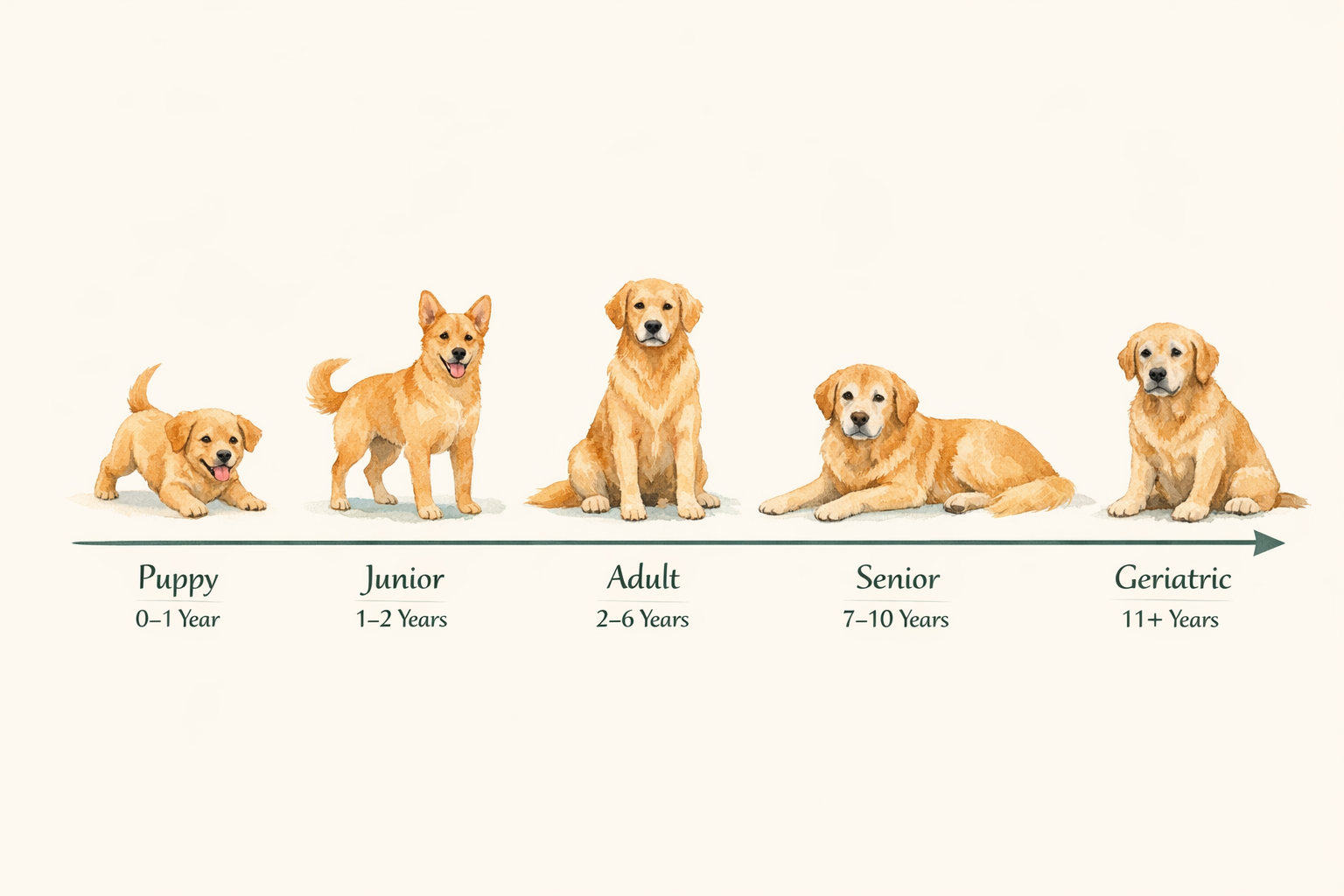
Labrador Retrievers have an average lifespan of approximately 12.1 years, which is respectable for a breed of their size. As with most popular large breeds, their most significant health challenges are predictable and substantially manageable with proactive care.
The obesity risk in Labrador Retrievers is not simply a matter of overfeeding — it has a genetic dimension that makes this breed uniquely vulnerable. A 2016 study from the University of Cambridge’s Department of Veterinary Medicine identified a mutation in the POMC gene that disrupts the normal production of hormones that signal fullness and regulate energy expenditure. The study found this mutation in approximately 23% of Labrador Retrievers in their sample, with guide dogs showing even higher prevalence. Dogs carrying this mutation are perpetually hungry, exhibit intense food-seeking behavior, and gain weight more easily than non-carriers. For owners of affected dogs, this means that even “normal” feeding amounts may be too much — careful body condition scoring and regular weigh-ins are necessary to manage the dog’s weight.
Obesity in Labradors compounds other health risks significantly. Excess body weight accelerates hip joint degeneration, increases the risk of cruciate ligament tears, impairs thermoregulation, and is associated with elevated cancer and cardiovascular disease risk. The value of maintaining a lean body condition throughout the Labrador’s life — where the ribs are easily palpable and the waist is visible from above — cannot be overstated.
Hip dysplasia is the most common structural health problem in the breed. The OFA has maintained hip health records for Labradors for decades; the most recent data shows that approximately 12% of evaluated Labradors have dysplastic hips. Selecting puppies from OFA-certified or PennHIP-evaluated parents substantially reduces risk. Management of affected dogs includes weight management, appropriate low-impact exercise (swimming is ideal), anti-inflammatory therapy, and in severe cases, surgical intervention.
Ear infections are among the most common veterinary complaints for Labrador Retrievers, driven by the combination of floppy ears, dense ear canal hair, and love of water. After swimming or bathing, water pooling in the ear canal creates an ideal environment for bacterial and yeast overgrowth. After every water exposure, the ears should be dried with a soft cloth or cotton ball. Weekly ear checks allow owners to catch early signs of infection — redness, odor, excessive scratching, or head shaking — before they become established. Chronic ear infections that are not properly treated can lead to permanent narrowing of the ear canal.
Frequently Asked Questions
Q: What is the average lifespan of a Labrador Retriever?
The Labrador Retriever has an average lifespan of 10–14 years, with a median around 12.1 years. Maintaining a lean body weight throughout life is the single most impactful thing owners can do, as the breed is highly prone to obesity which accelerates hip joint deterioration and increases cancer and cardiovascular disease risk.
Q: Is a Labrador Retriever good for first-time owners?
The Labrador Retriever is one of the best breeds for first-time owners due to its forgiving, friendly temperament and high trainability. Labs respond well to positive reinforcement and are naturally social, but owners should be prepared for high exercise needs, significant shedding, and the breed’s legendary food drive that requires strict portion management to prevent obesity.
Q: How much does it cost to own a Labrador Retriever per month?
Owning a Labrador Retriever typically costs $110–190 per month. Budget roughly $50–80 for food, $35–60 for pet insurance, and $25–50 for supplies and routine care. The breed’s higher-than-average cancer rates and hip dysplasia predisposition make comprehensive pet insurance a worthwhile investment.