History & Characteristics
The Greyhound is one of the oldest dog breeds in existence, with a documented history stretching across more than 4,000 years. Images closely resembling the Greyhound’s distinctive silhouette — lean body, narrow head, deep chest, arched loin, and long legs — appear in Egyptian tomb art dating to approximately 2900 BCE, in ancient Greek vase paintings, and in Roman mosaics. The Greyhound is the only dog breed mentioned by name in the Bible (Proverbs 30:31 in some translations), a reference that speaks to the breed’s enduring prominence in human civilization.
In medieval Europe, the Greyhound was a dog of the nobility. English forest law during the reign of King Canute in the 11th century explicitly forbade commoners from owning Greyhounds, and the penalty for killing a Greyhound was reportedly the same as for killing a man. Through the centuries, Greyhounds were bred for coursing — the pursuit of hare and other game by sight rather than scent — a purpose that shaped every aspect of their anatomy and behavior. The breed’s association with British aristocracy established the United Kingdom as its primary modern home, which is why England is recognized as the breed’s origin country for registration purposes.
In the 20th century, Greyhound racing became a major commercial industry in the United States, United Kingdom, Australia, and Ireland, with hundreds of thousands of dogs bred specifically for track performance. The industry has contracted dramatically due to animal welfare concerns, and in the United States, commercial Greyhound racing is now banned in most states. This contraction produced a large population of retired racing Greyhounds requiring homes, and a robust adoption network — most notably the National Greyhound Adoption Program and Greyhound Pets of America — has successfully placed hundreds of thousands of former racing dogs as companion animals.
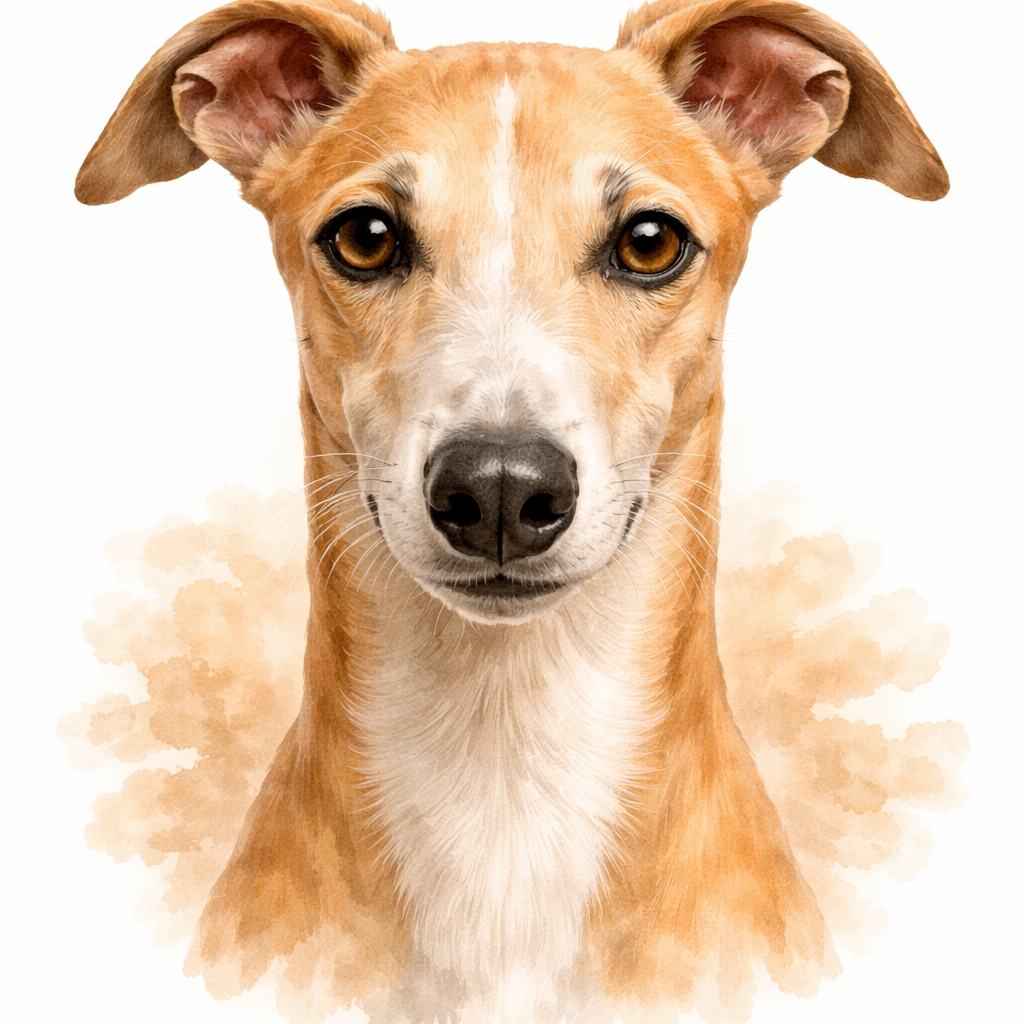
The AKC breed standard describes a Greyhound of 60–70 pounds and 25–27 inches in height, with a long, narrow head, small folded ears, a deep, capacious chest, tucked abdomen, and a long, muscular, slightly arched back that allows the breed to achieve its double-suspension gallop. Maximum recorded speeds exceed 45 miles per hour, making the Greyhound the fastest dog breed on Earth. The short, smooth coat is low-maintenance and comes in virtually every color.
Temperament & Personality
The Greyhound’s common description as “a 40-mph couch potato” is more than a joke — it accurately captures the breed’s split personality. At speed, the Greyhound is an electrifying athlete that moves with breathtaking efficiency. At rest — which is the state most Greyhounds prefer for the majority of each day — they are calm, quiet, and remarkably mellow companions that require very little drama or stimulation to be content.
Greyhounds are typically gentle and non-aggressive with people, including strangers and children. Former racing Greyhounds in particular have been extensively handled and exposed to crowds throughout their racing careers, producing adults that are accustomed to human contact and generally easy to manage in social settings. Their emotional sensitivity, however, is considerable — these are not dogs that respond well to harsh treatment, raised voices, or inconsistent handling. A calm, patient, and predictable household suits them far better than a chaotic one.
One temperament characteristic that prospective owners must understand clearly is prey drive. Greyhounds were bred to chase and catch moving objects, and this instinct operates largely independently of training. Many Greyhounds will pursue small animals — including cats, rabbits, and very small dogs — with lethal intent if given the opportunity. This does not make them unsuitable household companions, but it does mean that careful management is required: a securely fenced yard or consistent on-leash exercise, and careful, supervised introductions to any resident small animals.
Recall (coming when called) in an unfenced area is genuinely unreliable for most Greyhounds. A Greyhound that sees something worth chasing will launch at full speed and may cover a quarter mile before registering that it has been called. This is not disobedience — it is the breed’s fundamental behavioral architecture. The practical implication is simple: Greyhounds should only be off-leash in securely fenced areas.
Health & Lifespan
Greyhounds are generally a healthy, structurally sound breed with an average lifespan of approximately 11.5 years — respectable for a dog of their size. Their unique physiology, however, creates several specific considerations that owners and veterinarians should be well informed about.
The most important medical distinction for Greyhounds is their atypical response to barbiturate anesthetics, particularly thiopental. Because Greyhounds have very low body fat (typically 1–3%), these drugs are not absorbed and stored in adipose tissue as they are in other breeds, leading to prolonged and potentially dangerous anesthetic duration. Any veterinarian administering anesthesia to a Greyhound should be informed of the breed and should use the breed-appropriate protocols developed specifically for sighthounds, which typically favor propofol-based induction over barbiturates. Owners transitioning a Greyhound from a racing context to a companion home should communicate this information to their new veterinarian explicitly.
Greyhounds also have atypical blood values relative to the general canine population. Their red blood cell count (PCV/hematocrit), total protein, and several other parameters are normally higher than standard reference ranges would suggest, while thyroid hormone levels are normally lower. Interpreting Greyhound bloodwork using general canine reference ranges frequently produces false positives for anemia and hypothyroidism. A veterinarian familiar with the breed — or willing to use Greyhound-specific reference intervals — is important for accurate diagnostic interpretation.
Osteosarcoma, the malignant bone tumor listed among the breed’s disease risks, occurs at a meaningful frequency in large breeds generally and in Greyhounds specifically. Persistent lameness or unexplained swelling in a limb warrants prompt radiographic evaluation. Periodontal disease is the most common day-to-day health issue in the breed and can be substantially prevented through daily tooth brushing combined with annual professional cleanings under anesthesia.
For adopted retired racing Greyhounds, an initial comprehensive veterinary examination should include bloodwork using Greyhound-specific reference ranges, heartworm testing, intestinal parasite screening, and dental assessment, as racing facilities vary significantly in preventive care standards.
Frequently Asked Questions
Q: What is the average lifespan of a Greyhound?
The Greyhound has an average lifespan of 10–13 years, with a median around 11.5 years. Their lean build and relatively low rate of hereditary disease contribute to good health, though veterinarians must use breed-specific blood reference ranges to avoid misinterpreting Greyhound-normal values as abnormal.
Q: Is a Greyhound good for first-time owners?
The Greyhound is surprisingly well-suited to first-time owners, particularly those in smaller homes or apartments, as the breed is calm and low-energy indoors despite its racing reputation. Owners should be aware of the breed’s strong prey drive (requiring a securely fenced yard and leashed walks), its sensitivity to cold, and its requirement for breed-aware anesthetic protocols.
Q: How much does it cost to own a Greyhound per month?
Owning a Greyhound typically costs $110–190 per month. Budget roughly $50–80 for food, $35–60 for pet insurance, and $25–50 for supplies including coats for cold weather. Many Greyhounds are adopted as retired racing dogs at very low cost, making the acquisition cost considerably lower than buying from a breeder.