

History & Characteristics
The Golden Retriever’s origins are among the most precisely documented of any breed. In the 1860s, Dudley Marjoribanks, 1st Baron Tweedmouth, began a selective breeding program at his estate in the Scottish Highlands with the goal of producing an ideal wildfowl retriever suited to the rugged terrain and frequent rain of the Scottish uplands. His breeding records, preserved and later shared with the Kennel Club, show that the foundation cross was a yellow-colored wavy-coated retriever named Nous crossed with a now-extinct breed called the Tweed Water Spaniel. Subsequent generations incorporated bloodhound and Irish Setter crosses to refine scenting ability and coat quality. The result, by the early 20th century, was a breed of exceptional retrieving talent, outstanding nose work, and a characteristically gentle, biddable temperament.
The Kennel Club (UK) recognized the Golden Retriever in 1911, and the AKC followed in 1925. The breed became one of the most popular dogs in the United States in the second half of the 20th century and has remained consistently in the top five on AKC registration rankings. The Golden Retriever’s widespread use as a guide dog, service dog, search-and-rescue dog, and therapy dog has only reinforced its place in American culture.
The AKC breed standard describes a well-proportioned, symmetrical large dog of 21.5–24 inches in height and 55–75 pounds in weight. The breed’s most celebrated feature is its dense, water-repellent double coat, which ranges in color from light cream to rich dark gold. The outer coat is firm and resilient; the undercoat is soft and provides insulation. Feathering appears on the back of the legs, the underbelly, and the tail. The friendly, intelligent expression of the Golden Retriever — dark eyes, gentle gaze, eager posture — is widely considered one of the most appealing in all of dogdom.
Temperament & Personality
The AKC breed standard’s description of the Golden Retriever as “friendly, reliable, and trustworthy” is not hyperbole — it is an accurate characterization of a breed whose temperament has been shaped over more than a century of selection for gentle cooperation with humans. Golden Retrievers are genuinely social animals. They approach strangers with enthusiasm rather than suspicion, they tolerate children’s rough play with extraordinary patience, and they extend the same goodwill to other dogs and household pets. Their inability to perform convincingly as guard dogs (most Goldens would show a burglar where the silverware is stored) is considered a feature rather than a bug by those seeking a family companion.
The Golden Retriever’s intelligence is high — Stanley Coren’s rankings place them fourth among all breeds — and their eagerness to please makes training a genuine pleasure for owner and dog alike. They respond enthusiastically to positive reinforcement and have a natural affinity for tasks that involve retrieving, carrying, and working in close partnership with a handler. This makes them highly versatile: the same qualities that produce a superb hunting companion also produce a superb therapy dog, competitive obedience dog, or nose work competitor.
One behavioral consideration owners must manage is the breed’s perpetual enthusiasm. Golden Retrievers are physically large, and an undertrained adult Golden that jumps on visitors, pulls on leash, or barges through doorways can be difficult to live with. Basic obedience training should begin in puppyhood, and the foundation cue “sit” to greet people — rather than jumping — should be established early and reinforced consistently.
Golden Retrievers do not do well with extended isolation. They are true companion dogs that need regular human contact. Dogs that spend most of their time alone tend to develop anxiety-related behaviors including excessive barking, destructive chewing, and restlessness.
Health & Lifespan
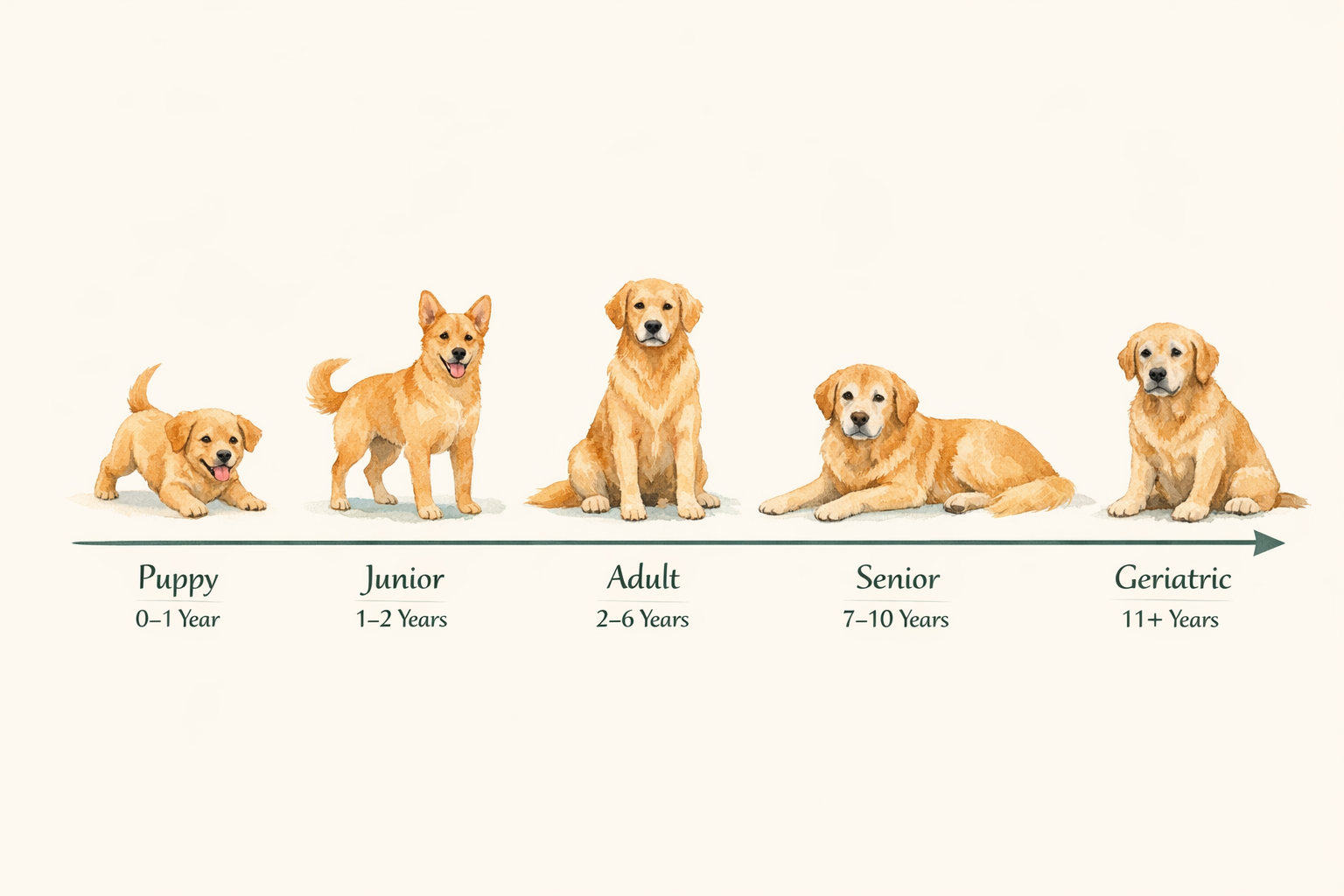
Golden Retrievers have an average lifespan of approximately 10.9 years — noticeably shorter than the 12–14 years common among smaller dog breeds, and a figure that has attracted significant scientific attention due to the breed’s unusually high cancer prevalence.
The Golden Retriever Cancer Study, a landmark long-term research initiative managed through the Morris Animal Foundation, enrolled more than 3,000 purebred Golden Retrievers in the United States to investigate the genetic, environmental, and lifestyle factors underlying the breed’s cancer burden. Estimates suggest that approximately 60% of Golden Retrievers in North America die of cancer — roughly twice the rate observed in dogs generally. Lymphoma, hemangiosarcoma, osteosarcoma, and mast cell tumors account for the majority of cancer-related deaths. There is currently no reliable screening test that prevents or detects these cancers early, making regular full-body physical examinations — by both the owner and the veterinarian — critical for catching any new lumps, bumps, or abnormal lymph nodes as early as possible. Any mass should be evaluated promptly rather than adopting a “wait and see” approach.
Hip dysplasia is the breed’s most common orthopedic problem. The OFA estimates that approximately 20% of Golden Retrievers have hip dysplasia, making it essential to select puppies from parents with documented OFA or PennHIP clearances. Maintaining a lean body weight throughout life is the single most impactful thing owners can do to slow the progression of hip joint deterioration.
Allergic skin disease requires ongoing management in a significant percentage of Golden Retrievers. Chronic ear infections, paw licking, facial rubbing, and generalized itching are common presentations. A diet trial using a novel protein source or a hydrolyzed diet, combined with appropriate veterinary treatment for secondary infections, is the standard starting point. Omega-3 fatty acid supplementation (fish oil) supports skin barrier function and has an anti-inflammatory effect that benefits many allergic dogs.
Ear health deserves particular attention given the breed’s drop ears and love of water. After any swimming session, ears should be dried and inspected. Weekly ear checks and prompt veterinary attention for any redness, odor, or discharge prevent minor infections from becoming chronic problems.
Frequently Asked Questions
Q: What is the average lifespan of a Golden Retriever?
The Golden Retriever has an average lifespan of 10–13 years, with a median around 10.9 years. The breed’s lifespan is notably influenced by its elevated cancer risk — studies suggest that over 60% of Golden Retrievers die from cancer — making regular hands-on health checks and annual veterinary exams especially important.
Q: Is a Golden Retriever good for first-time owners?
The Golden Retriever is one of the best breeds for first-time owners thanks to its gentle, eager-to-please temperament and high trainability. The breed is forgiving of mistakes, responds enthusiastically to positive reinforcement, and integrates naturally into family life — though owners should be prepared for its high exercise needs and significant shedding.
Q: How much does it cost to own a Golden Retriever per month?
Owning a Golden Retriever typically costs $110–190 per month. Budget roughly $50–80 for food, $35–60 for pet insurance (strongly recommended given the breed’s cancer risk), and $25–50 for supplies and grooming. Regular professional grooming to manage the dense double coat is an additional recurring expense.