History & Characteristics
The Bulldog’s history is both ancient and, in its earlier chapters, deeply troubling. The breed was developed in England beginning in the 13th century for the sport of bull-baiting — a brutal practice in which dogs were set upon a tethered bull for gambling entertainment. The bull-baiting Bulldog was an entirely different creature from the dog we know today: ferocious, pain-tolerant, and built specifically to seize a bull by the nose and cling. The low body, wide stance, recessed nose, and undershot jaw all evolved as functional adaptations for this dangerous activity.
Bull-baiting was banned by the British Parliament’s Cruelty to Animals Act of 1835. With its original purpose illegal, the Bulldog faced extinction. A group of dedicated fanciers undertook a systematic transformation of the breed, selecting over generations for extreme reduction in aggression while preserving the distinctive appearance. The result was one of the most remarkable temperament rehabilitations in dog breed history: a dog whose ancestors were bred for ferocity was transformed into one of the most gentle, placid, and people-loving breeds in existence.
The English Kennel Club registered the Bulldog in 1886. The AKC followed in 1886 as well, placing the breed in what is now the Non-Sporting Group. The Bulldog became a potent symbol of British national character — particularly during World War II, when Prime Minister Winston Churchill’s bulldog-like determination made the association irresistible. The breed is today the official mascot of dozens of American universities including Yale, Georgetown, and the University of Georgia.
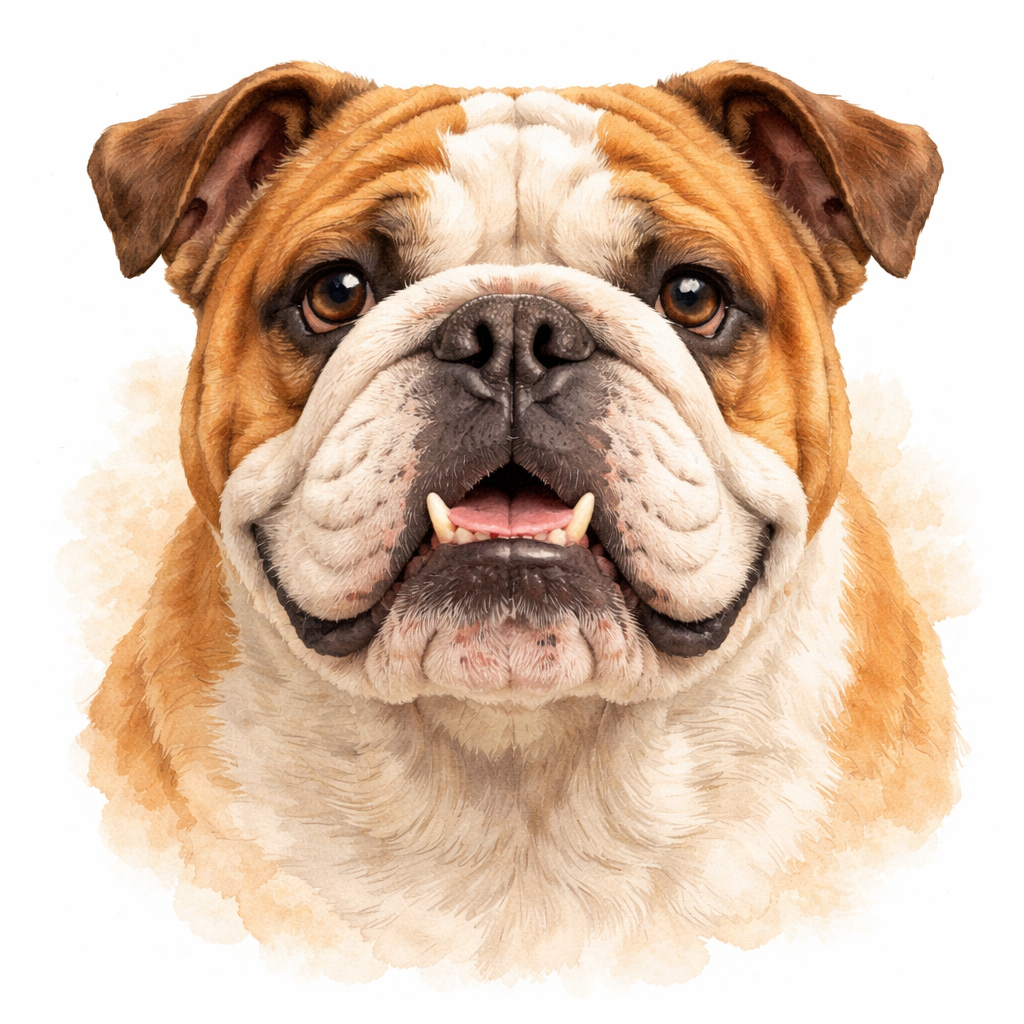
The modern Bulldog weighs 18–25 kg (40–50 lbs) in a remarkably compact, low-slung body standing just 14–15 inches tall. The broad, massive head with its deeply furrowed brow, wide nose roll, and prominent undershot jaw gives the Bulldog its immediately recognizable silhouette. The short, smooth coat comes in brindle, solid red, fawn, white, or piebald patterns. The breed’s corkscrew-style screw tail and thick-set, bow-legged walk round out its unmistakable physical presentation.
Temperament & Personality
Few dog breeds have undergone a personality transformation as dramatic as the Bulldog. Today’s English Bulldog bears almost no behavioral resemblance to its bull-baiting ancestor. The modern Bulldog is, by most accounts, among the gentlest, most laid-back, and most dependably even-tempered dogs available.
The Bulldog’s preferred lifestyle is thoroughly domestic: a comfortable couch, proximity to its family, and perhaps a brief stroll around the block represent its ideal day. Bulldogs are not energetic dogs; they are deliberate, steady, and unhurried. This makes them excellent dogs for less active owners, urban apartment dwellers, and families seeking a calm companion rather than an outdoor adventure partner.
With children, Bulldogs are famously patient. The breed’s low energy and gentle tolerance mean it can absorb a good deal of handling from young children without complaint. Bulldogs are not prone to snapping or overreacting to the clumsiness of toddlers, and their solid build means they are not easily injured by boisterous play. This combination makes them a perennially popular choice for families.
The Bulldog does have an independent, sometimes stubborn streak. The breed will not reliably comply with training commands it finds pointless, and no amount of firmness will override a Bulldog that has decided not to move. Working with this personality — using food motivation, patience, and short training sessions — is far more productive than attempting to impose will through force or frustration. Bulldogs are highly food-motivated, which is the primary lever for successful training.
One non-negotiable aspect of Bulldog life: the snoring. Bulldogs are loud sleepers whose nighttime sounds can be quite dramatic. This is an anatomical inevitability of the brachycephalic structure rather than a health symptom (though very loud or labored breathing during activity warrants veterinary attention).
Health & Lifespan
The Bulldog has the shortest average lifespan of the breeds on this list — approximately 8–12 years, with a median around 10 years — a direct consequence of the health challenges associated with its extreme anatomy. Informed, proactive health management from the very beginning of ownership makes a meaningful difference to both length and quality of life.
Brachycephalic Obstructive Airway Syndrome (BOAS) is the Bulldog’s foremost health concern. The breed’s compressed skull gives rise to multiple overlapping airway abnormalities: stenotic nares (nostrils so narrow as to restrict airflow), an elongated soft palate that partially blocks the windpipe, a narrowed trachea, and in some dogs, laryngeal collapse as a secondary consequence of the chronic increased respiratory effort. The result is a dog that must work significantly harder than other breeds to breathe, especially during exercise or in warm weather. Heat is the Bulldog’s greatest enemy. On warm days, exercise should be restricted to early morning or evening walks; the dog should never be left in a car, even briefly. Indoors, air conditioning is not a luxury for this breed — it is a necessity. Owners of bulldogs with moderate to severe BOAS should consult a veterinary surgeon about corrective procedures (widening of the nares, shortening of the elongated palate) that can dramatically improve a dog’s breathing capacity and quality of life.
Skin fold dermatitis requires daily maintenance. The wrinkles on the Bulldog’s face — especially the deep rope (the large fold above the nose), the folds around the eyes, and the folds on the body — must be cleaned daily with a gentle, damp cloth or pet-safe wipe, then thoroughly dried. Moisture trapped in these folds creates the ideal environment for bacterial and fungal infections that cause redness, odor, and chronic skin breakdown. The tail pocket (the skin indentation around the corkscrew tail) requires the same treatment. Owners who commit to this daily routine prevent most skin problems; those who neglect it will face recurring veterinary visits for skin infections.
Hip Dysplasia in the Bulldog is compounded by the breed’s heavy, wide-set body placing disproportionate stress on the hip joints. Weight management — keeping the dog at the lean end of its healthy weight range — is the most important strategy for protecting joint health over the long term.
Bulldogs are also prone to cherry eye (prolapse of the third eyelid gland), urinary tract stones (particularly cystine stones), and reproductive difficulties (most Bulldog litters require cesarean delivery due to the size of the puppies’ heads relative to the dam’s birth canal).
Frequently Asked Questions
Q: What is the average lifespan of a Bulldog?
The Bulldog has an average lifespan of 8–12 years, with a median around 10 years — shorter than many breeds, largely due to the health challenges associated with its extreme brachycephalic anatomy. Informed, proactive health management — particularly around breathing, skin folds, and weight — makes a meaningful difference to both length and quality of life.
Q: Is a Bulldog good for first-time owners?
The Bulldog can be a good match for first-time owners who are prepared for its specific health needs and daily maintenance requirements. The breed is gentle, patient, and low-energy indoors, which suits a wide range of lifestyles, but owners must commit to daily skin fold cleaning, heat safety management, and regular veterinary checkups.
Q: How much does it cost to own a Bulldog per month?
Owning a Bulldog typically costs $85–145 per month for food and insurance, but ongoing veterinary costs for this breed tend to be higher than average. Budget $35–55 for food, $30–50 for pet insurance, and $20–40 for supplies — plus additional funds for potential BOAS treatment, skin fold care products, and more frequent vet visits.