History & Characteristics
The Border Collie takes its name from the borderlands between England and Scotland — the rugged, hilly terrain where the breed was developed over centuries to manage sheep with unparalleled skill. The breed as we know it today traces its lineage to a dog born in 1893 named Old Hemp, a tricolor male owned by Adam Telfer of Northumberland. Old Hemp revolutionized the way herding dogs worked: rather than the barking, physically aggressive style of older working dogs, he used silent, intense eye contact and a low, crouching stalk to control sheep with minimal stress. This “eye” style became the defining characteristic of the modern Border Collie, and virtually all registered Border Collies today are descended from Old Hemp.
The Border Collie’s development was entirely performance-driven rather than appearance-driven, which distinguishes it sharply from most other breeds. Sheepdogs were selected purely on their ability to work. This has resulted in a dog whose intelligence, athleticism, and work ethic are extraordinary even by the standards of other herding breeds. The International Sheep Dog Society (ISDS) has maintained a registry for Border Collies since the early 20th century, and sheepdog trials — competitive events judging a dog’s herding ability — remain a central tradition tied to the breed.
The AKC formally recognized the Border Collie in 1995, placing it in the Herding Group. The breed is consistently ranked as the most intelligent of all dog breeds in assessments of working and obedience intelligence. Research has documented individual Border Collies with vocabularies of over 1,000 words. Chaser, a Border Collie studied at Wofford College in South Carolina, learned the names of 1,022 individual objects and demonstrated an ability to reason about grammar-like structures.
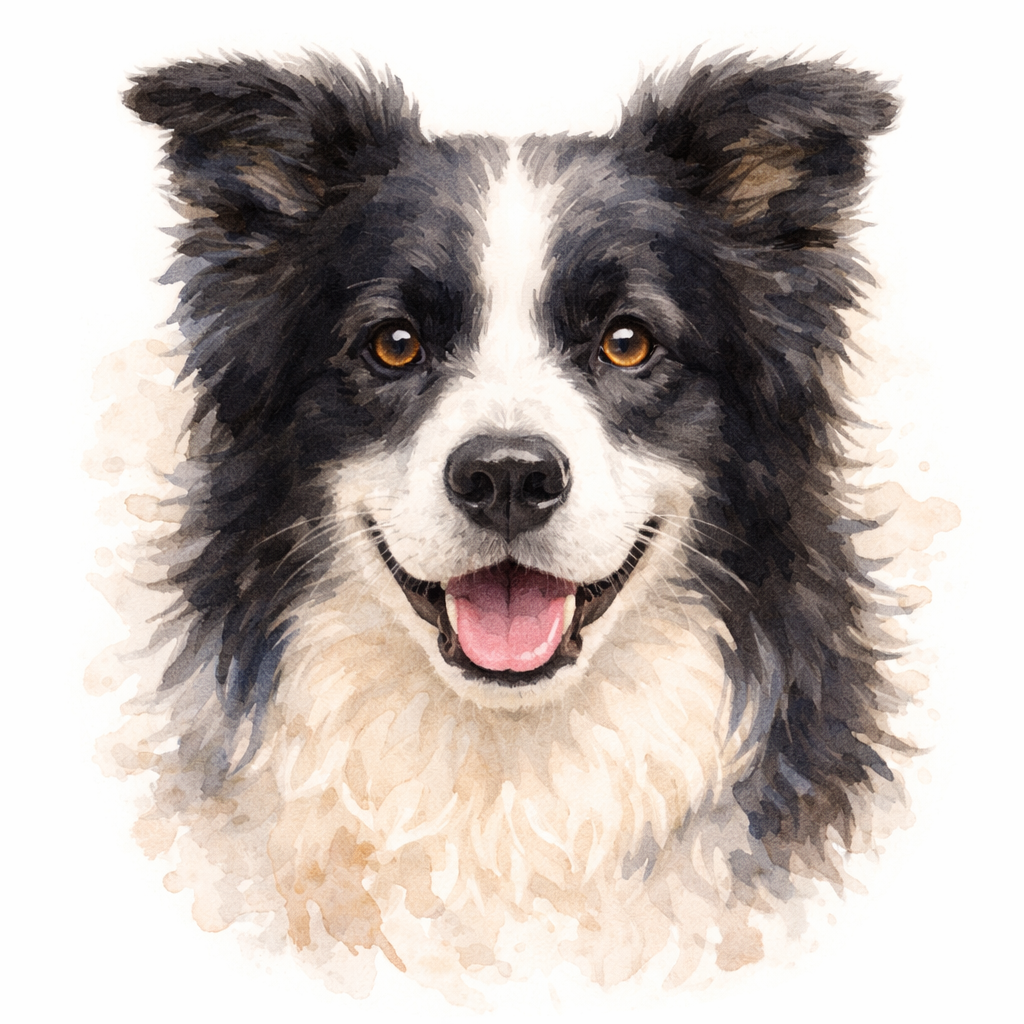
Physically, the Border Collie is a medium-sized, athletic dog weighing 14–20 kg (30–45 lbs). The breed comes in two coat types — rough (longer, with feathering) and smooth (shorter, more streamlined) — and in a wide array of colors including black and white, red and white, blue merle, red merle, and tricolor. The eyes are oval, set well apart, and can be brown, blue, or marbled, with an alertness and intensity that reflects the breed’s relentless mental engagement with the world.
Temperament & Personality
The Border Collie is defined by its drive to work. This is not a breed that relaxes easily — it is always scanning, processing, and looking for something to do. Border Collies are described as “workaholic” dogs for good reason: they find their deepest satisfaction in tasks, challenges, and purposeful activity. The intelligence that makes them so capable is also the source of their most demanding behavioral traits. A bored Border Collie will not simply sleep; it will find something to manage, rearrange, or dismantle.
Within the family, Border Collies form intense bonds and are deeply loyal. They are sensitive to human emotion and will shadow their favorite people closely. With strangers, they are typically watchful and reserved rather than openly friendly. The breed’s instinct to manage moving objects — sheep in the field, children and pets in the home — is always present. Border Collies may try to herd running children by nipping at heels, circling, or pushing with their body. This behavior stems from instinct, not aggression, but requires consistent management and redirection in family settings.
Border Collies are exceptionally responsive to training. They learn new commands in as few as five repetitions and perform them reliably with 95% or greater accuracy, according to Coren’s intelligence rankings. This makes them brilliant partners for dog sports including agility, flyball, disc dog (frisbee), and obedience competition, where they dominate at the top levels worldwide. However, the same quick learning means they also learn undesirable behaviors rapidly. Consistent, clear communication is essential — mixed messages from multiple household members create confusion in a dog that is constantly trying to figure out the rules.
Mental stimulation is not optional for this breed; it is as necessary as physical exercise. Puzzle feeders, scent work, trick training, and interactive games should be a daily part of a Border Collie’s routine. The general guideline from Border Collie welfare experts: a minimum of two hours of active, engaged exercise and mental activity per day.
Health & Lifespan
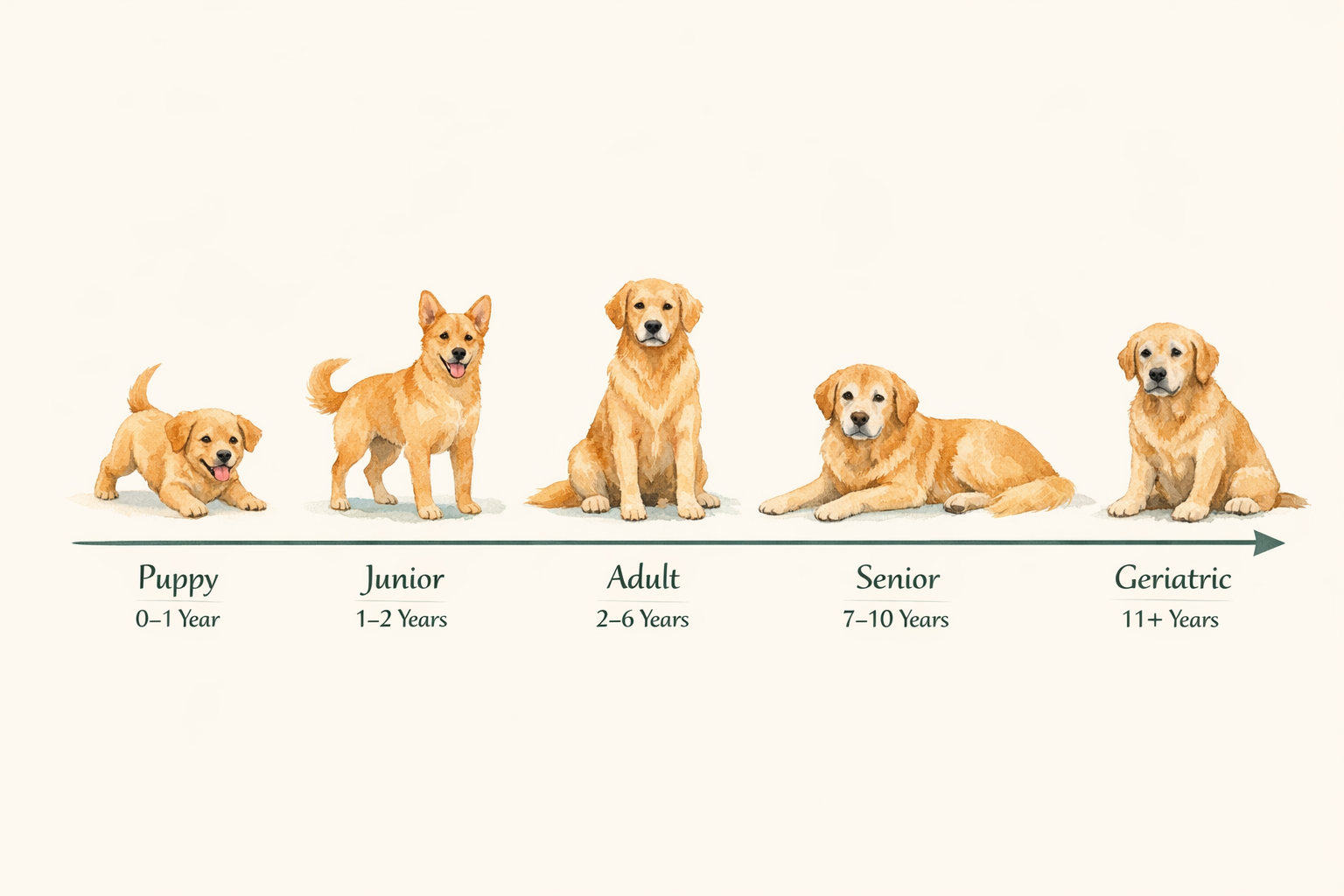
The Border Collie is a hardy working breed with an average lifespan of 12–15 years, with a median around 13.5 years. The breed’s primary hereditary concerns can largely be managed through responsible breeding practices and early genetic screening.
Collie Eye Anomaly (CEA), also called Choroidal Hypoplasia (CH), is the most prevalent hereditary eye condition in Border Collies. CEA is caused by a recessive genetic mutation and affects the development of the choroid (the vascular layer beneath the retina). In mild cases — the most common form — the condition causes no clinically significant vision impairment. In more severe cases, optic disc colobomas or retinal detachment can cause vision loss or blindness. DNA testing for the CEA mutation is readily available and strongly recommended for all breeding dogs. When purchasing a puppy, ask the breeder for documentation of CEA test results for both parents.
Epilepsy in Border Collies is primarily idiopathic — seizures without an identifiable structural cause — with a recognized hereditary basis. Onset typically occurs between 1 and 5 years of age. Seizures can range from mild partial events to generalized tonic-clonic episodes. Anticonvulsant medications control seizures effectively in most dogs, though management is typically lifelong and requires periodic monitoring of blood drug levels and liver enzyme values.
Hip Dysplasia occurs in Border Collies with moderate frequency. As an athletically demanding breed, hip joint integrity is especially important for this dog’s quality of life and working capacity. OFA evaluations of breeding dogs and maintaining lean body weight are the primary strategies for reducing prevalence and progression.
Border Collies also carry a significant rate of the MDR1 (ABCB1) gene mutation, which causes drug sensitivity to several commonly used medications including ivermectin and loperamide. Genetic testing is available and recommended. Additionally, Progressive Retinal Atrophy (PRA) and Neuronal Ceroid Lipofuscinosis (NCL, also called CL) — a severe neurological storage disease — are reported in the breed and can be screened for through DNA testing. These conditions make comprehensive genetic panels a wise investment before breeding any Border Collie.
Frequently Asked Questions
Q: What is the average lifespan of a Border Collie?
The Border Collie has an average lifespan of 12–15 years, with a median around 13.5 years. As a hardy working breed with a healthy constitution, many Border Collies thrive well into their teens when provided with sufficient exercise, mental stimulation, and regular veterinary care.
Q: Is a Border Collie good for first-time owners?
The Border Collie is not recommended for first-time owners unless they are highly experienced with active, working-type dogs. This breed requires at least two hours of intense mental and physical activity daily, and its herding instincts can make it challenging to manage around children or other pets without consistent, experienced training.
Q: How much does it cost to own a Border Collie per month?
Owning a Border Collie typically costs $85–145 per month. Expect to spend roughly $35–55 on food, $30–50 on pet insurance, and $20–40 on supplies. The breed’s intense activity level may also add costs for agility classes, dog sports competitions, or professional training.