
History & Characteristics
The Saint Bernard is one of the most iconic working dogs in history, a breed whose image — the barrel-collared rescue dog in the snow-covered Alps — has permeated Western culture for over two centuries. The breed’s origins lie in the Great St. Bernard Pass, a mountain route between Switzerland and Italy that sits at over 8,000 feet in elevation. This pass was used for centuries by travelers, merchants, pilgrims, and soldiers, all of whom faced deadly exposure to sudden blizzards and avalanches in the region.
The hospice at the pass, founded in the 11th century by St. Bernard of Menthon and maintained by Augustinian monks, began keeping large dogs — descended from mastiff-type breeds brought to the Alps by the Romans — some time around the late 17th century. Initially used as watchdogs and to accompany monks, the dogs proved exceptional at finding travelers buried in snow. They learned to use their powerful sense of smell to locate victims beneath deep drifts, then lie against them to provide warmth until help arrived.
The most celebrated individual of the breed was Barry, a dog credited with saving more than 40 lives during the early 1800s. His preserved remains are displayed at the Natural History Museum in Bern, and a living Saint Bernard maintained at the original hospice is named “Barry” in his honor as a permanent tribute. The breed was introduced to England in the early 19th century and to the United States shortly afterward. AKC recognition came in 1885, and the Saint Bernard was placed in the Working Group.
The AKC standard describes the Saint Bernard as a very large, powerful, proportionately tall dog. Males stand a minimum of 27.5 inches at the shoulder; females at least 25.5 inches. Weight typically ranges from 120 to 180 pounds or more. The head is massive and impressive, with a wide, slightly arched skull and a deep, short, square muzzle. Eyes are dark, medium-sized, and friendly in expression. Two coat varieties exist: the shorthaired (smooth) and the longhaired (rough). Both are dense and come in white with red or brindle markings, or red and brindle with white markings. White markings are expected on the muzzle, blaze, collar, chest, feet, and tip of the tail.
Temperament & Personality
The Saint Bernard is the quintessential “gentle giant” — a dog of enormous physical presence paired with an exceptionally calm, patient, and benevolent disposition. Despite their formidable size, Saint Bernards are not fierce or aggressive; they are characteristically placid, good-natured, and deeply devoted to the people in their lives.
Saint Bernards are famously gentle with children. They tolerate the attention, noise, and unpredictable movements of young children with remarkable patience and have long been considered one of the safest large breeds around families with kids. That said, their sheer size means that an excited or clumsy Saint Bernard can inadvertently knock over a small child; adult supervision during interactions with toddlers is always prudent.
The breed is not highly energetic. Unlike working breeds that demand hours of daily exercise, the Saint Bernard is content with moderate daily activity — 30 to 60 minutes of calm walking suits most adults well. They are unlikely to become destructive from pent-up energy, though they do appreciate companionship and are not suited to being left alone for extended periods. Long-term isolation causes stress and can lead to anxious behaviors.
Trainability in Saint Bernards is decent but requires patience. The breed has an independent, unhurried quality — they think before they move and are not given to rapid, eager responses in the way terriers or herding breeds might be. Positive reinforcement training with generous food rewards works well, and the Saint Bernard will learn reliably if training sessions are kept short (10–15 minutes), consistent, and enjoyable. What matters most is that basic obedience — especially loose-leash walking and not jumping on people — is established firmly while the dog is still a puppy. A 150-pound dog that has not learned manners is extraordinarily difficult to manage.
Health & Lifespan
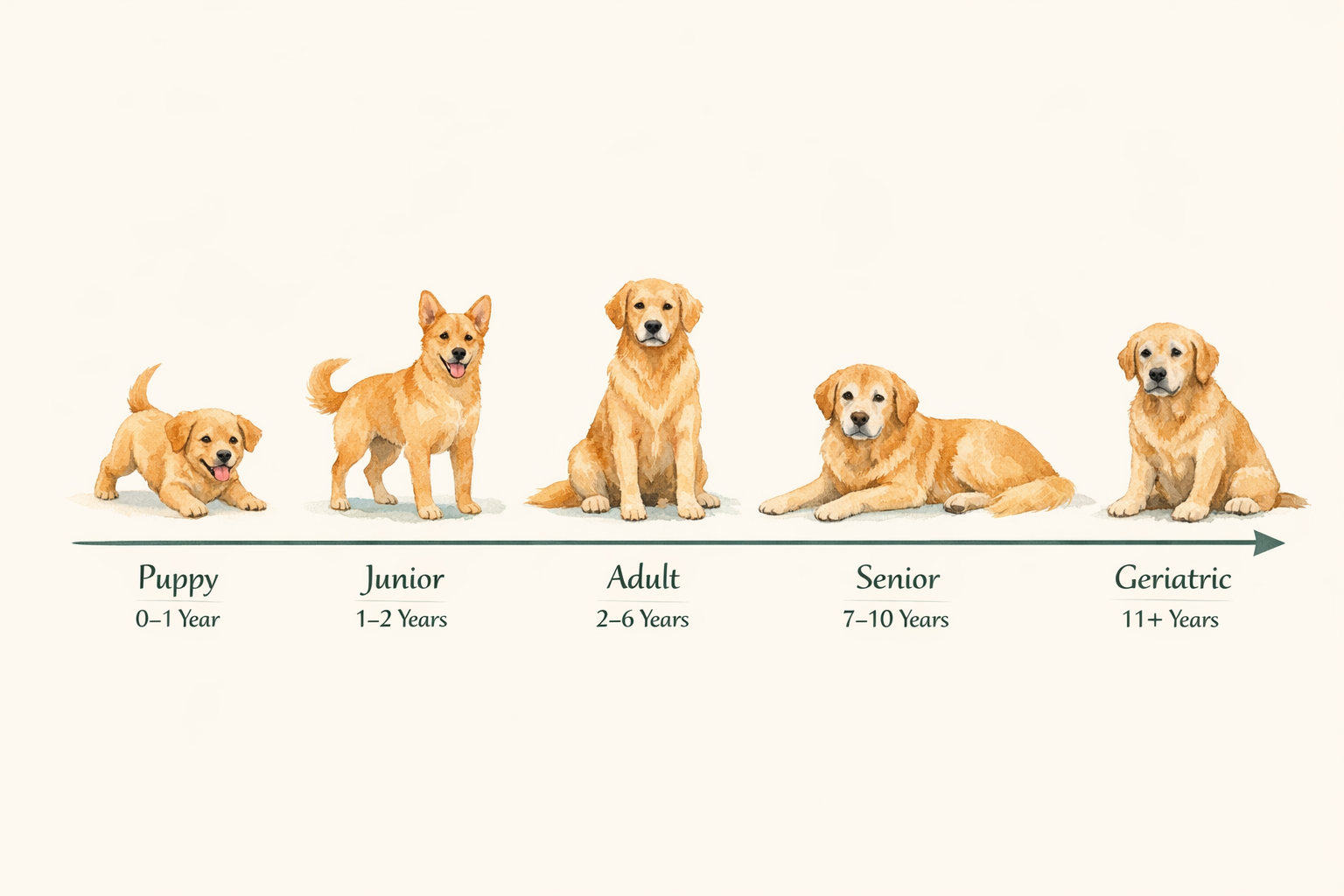
The Saint Bernard has an average lifespan of approximately 9 years and a typical range of 8 to 10 years, which is in line with most giant breeds. Giant breeds age faster than small ones, and owners should be prepared for a shorter-than-average time with this breed. Three major health concerns dominate the Saint Bernard health picture.
Gastric dilatation-volvulus (GDV), commonly called bloat, is the most acute threat to Saint Bernard life. The deep-chested conformation of giant breeds creates physical conditions that predispose the stomach to both distension with gas and torsion — twisting on its mesenteric axis — which cuts off blood supply to both stomach and spleen. The condition progresses rapidly and is fatal without emergency surgery. Symptoms include a visibly distended abdomen, non-productive retching or gagging, restlessness, drooling, and collapse. Any dog showing these signs requires immediate emergency veterinary care. Preventive measures include feeding two or three smaller meals daily rather than one large meal, avoiding vigorous exercise for an hour before and after meals, and using an elevated food bowl. Prophylactic gastropexy — surgical attachment of the stomach to the abdominal wall — eliminates the risk of torsion and is increasingly recommended at the time of spay or neuter for deep-chested giant breeds.
Hip dysplasia affects Saint Bernards at high rates, and the breed’s massive weight transforms moderate joint abnormalities into clinically significant lameness and arthritis earlier in life than in lighter breeds. OFA hip evaluations of breeding stock are the baseline standard for responsible breeding. Owners should focus on keeping their Saint Bernard at a healthy weight throughout life, feeding a large- or giant-breed puppy formula during growth to avoid the excessive caloric density that can accelerate skeletal development beyond what joints can support, and providing joint supplements (glucosamine, chondroitin, omega-3 fatty acids) beginning in middle age.
Cardiac disease — primarily dilated cardiomyopathy in older dogs — becomes a growing concern from about age 5 onward. Annual cardiac auscultation and periodic echocardiography from middle age are appropriate monitoring tools. Signs of cardiac compromise include reduced exercise tolerance, increased respiratory rate at rest, coughing, and weakness.
Prospective owners should budget for pet health insurance given the potential cost of emergency GDV surgery, orthopedic procedures, and ongoing cardiac management in this breed.
Frequently Asked Questions
Q: What is the average lifespan of a Saint Bernard?
The Saint Bernard has an average lifespan of 8–10 years, with a median around 9 years — typical for a giant breed where body size inversely correlates with longevity. Bloat prevention, weight management, and cardiac monitoring are the most critical factors in maximizing healthy years for this breed.
Q: Is a Saint Bernard good for first-time owners?
The Saint Bernard can be manageable for first-time owners who have adequate space and resources, as the breed is genuinely gentle, patient, and affectionate. However, first-time owners must be prepared for the breed’s massive size, substantial food and veterinary costs, intensive grooming needs, and significant drooling — and must be able to physically manage a dog that may weigh over 80 kg.
Q: How much does it cost to own a Saint Bernard per month?
Owning a Saint Bernard typically costs $140–230 per month. Budget roughly $70–100 for food, $40–70 for pet insurance, and $30–60 for supplies. Emergency GDV surgery can cost several thousand dollars, and regular professional grooming for the long-coated variety adds further to monthly expenses.