History & Characteristics
Despite the name, the Great Dane is thoroughly German in origin. In Germany, the breed is called the Deutsche Dogge (German Mastiff), a name that more accurately reflects its heritage. The term “Great Dane” originated from the French naturalist Georges-Louis Leclerc, Comte de Buffon, who encountered a leaner version of the breed in Denmark and called it the “Grand Danois” in the 18th century — the name stuck in the English-speaking world even though the breed’s development occurred primarily in Germany.
Great Dane-type dogs appear in ancient art across multiple civilizations: Egyptian monuments dating to roughly 3000 BCE depict large dogs with muscular build and erect carriage, and similar imagery appears in Greek and Roman artifacts. In medieval Europe, large boarhounds were kept by German nobility for hunting wild boar — the most dangerous quarry of the era — and these dogs formed the foundation stock for what would become the Great Dane. By the 16th and 17th centuries, German aristocrats were maintaining large kennels of impressive hunting dogs, and selective breeding toward a specific type intensified. In 1880, German breeders meeting in Berlin formally named the breed Deutsche Dogge and established the initial breed standard.
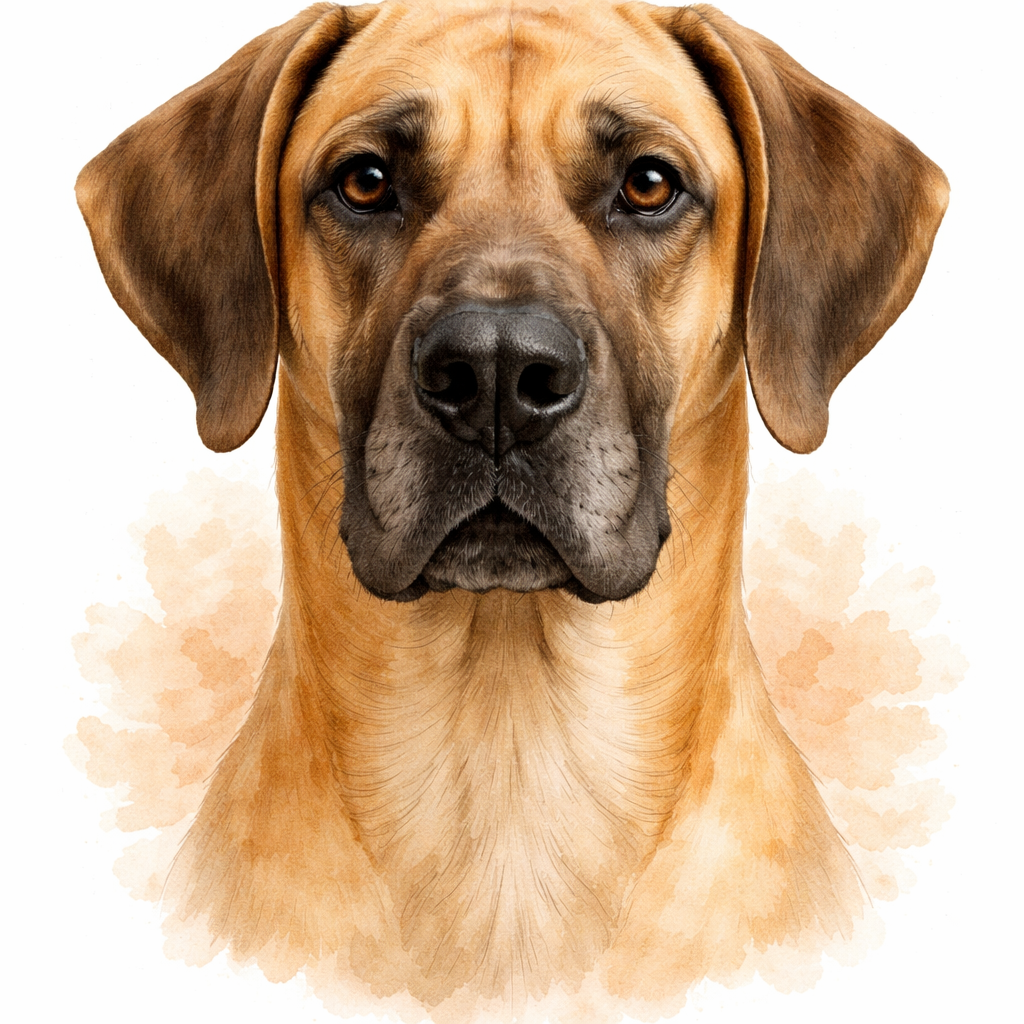
The AKC recognized the Great Dane in 1887, making it one of the earliest breeds registered with the club. According to the AKC breed standard, the Great Dane is the tallest of dog breeds, with males standing a minimum of 30 inches at the withers and females 28 inches. Males routinely exceed 32 inches and 140 pounds; the tallest Great Danes on record have stood over 44 inches. Despite this scale, the breed standard calls for an elegant, well-formed dog — not simply a massive one. The short, smooth, dense coat comes in six recognized colors and patterns: fawn, brindle, blue, black, harlequin (white with irregular black patches), and mantle. The natural ear is pendant; ear cropping to a pointed, upright shape was historically standard in the United States but is increasingly uncommon.
The Great Dane holds multiple Guinness World Records for height. Zeus, a Great Dane from Michigan, was verified at 44 inches tall in 2011 — the tallest dog ever recorded.
Temperament & Personality
The Great Dane is universally described as the “Gentle Giant,” and this characterization is well-earned. Despite a size that could be genuinely intimidating, the breed’s temperament is fundamentally warm, friendly, and patient. The AKC breed standard describes the ideal Great Dane as “friendly, patient, and dependable” — a spirited and courageous dog that is never timid or aggressive. In practice, Great Danes are typically sociable with people of all ages and, when properly socialized, with other animals.
One of the more endearing paradoxes of the breed is that Great Danes appear completely unaware of their size. They regularly attempt to sit in laps, lean against their owners with full body weight, and squeeze into spaces that are clearly inadequate. A well-raised Great Dane typically has no concept of itself as anything other than a particularly large lap dog, which is charming — but also means that an undertrained Great Dane that jumps on people or pulls on leash is a genuinely dangerous situation. Obedience training, beginning in puppyhood and continuing throughout adolescence, is a practical necessity rather than an optional enrichment activity.
Great Danes are sensitive dogs that respond poorly to harsh or punitive training. They learn well through consistent positive reinforcement, though their size and independent nature mean that training sessions must be managed with clear expectations from the start. Early socialization — exposure to a wide range of people, environments, sounds, and other animals during the first several months of life — produces a Great Dane that is relaxed and appropriate in most social contexts.
The breed is not high-energy relative to its size. Adult Great Danes are satisfied with two 20–30-minute walks per day and do not require the intense exercise regimen of sporting or herding breeds. However, they do not do well confined to small spaces and should have free access to an adequately sized living area. Companionship is essential — Great Danes that are left alone for extended periods are prone to separation anxiety and the destructive behaviors it produces.
Health & Lifespan
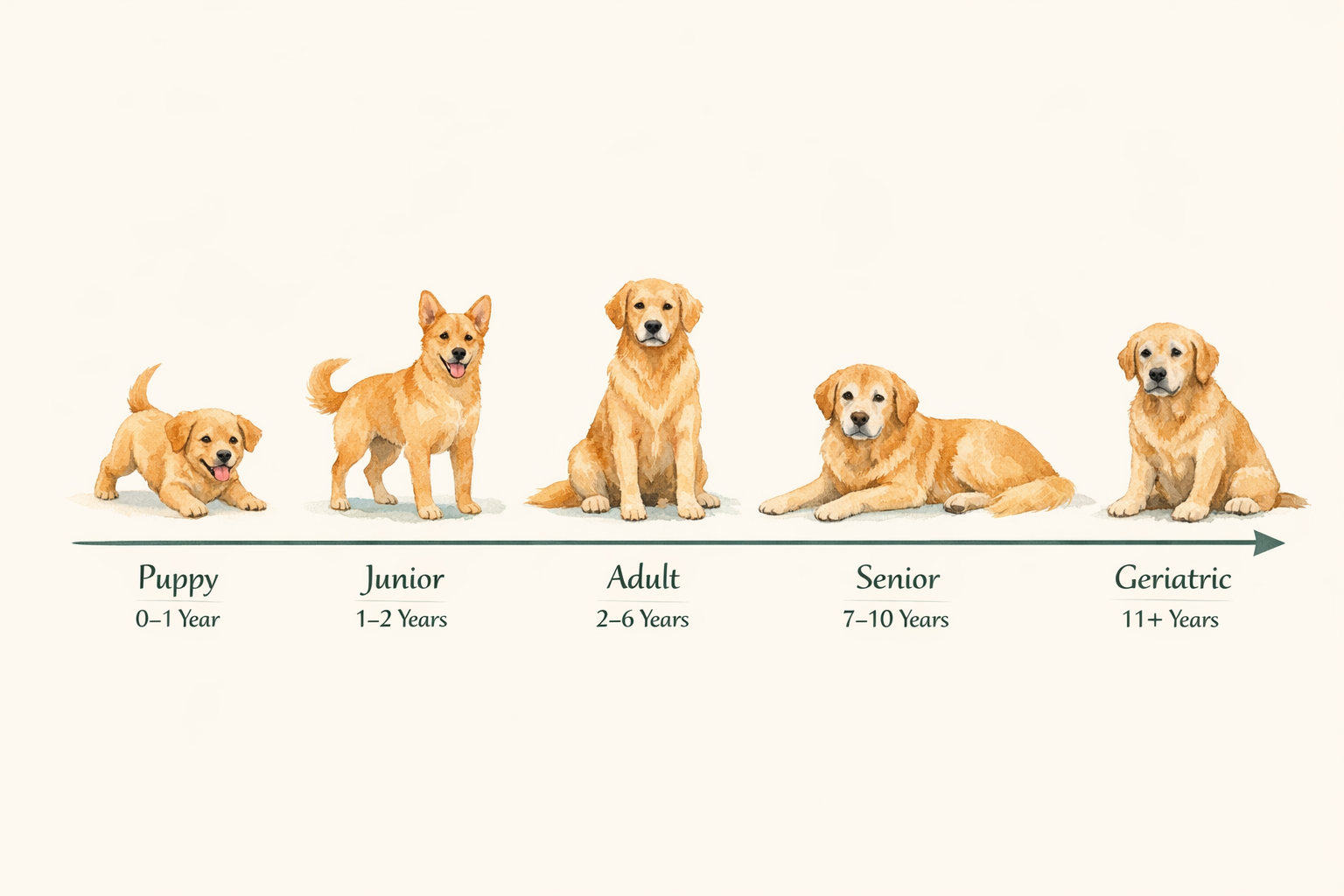
The Great Dane’s average lifespan of approximately 8.5 years is among the shortest of any recognized breed, a reality that all prospective owners must confront honestly before committing to the breed. Giant breeds age more rapidly than smaller dogs, and the sheer physical demands placed on the cardiovascular and musculoskeletal systems by a 100-plus-pound body contribute to the abbreviated lifespan.
Gastric dilatation-volvulus (GDV) is the condition most likely to cause sudden death in Great Danes and demands the highest level of owner awareness. The stomach first dilates with gas (bloat), and then rotates on its mesenteric axis, trapping gas and cutting off blood supply to the stomach wall and spleen. Without emergency surgical intervention, GDV is fatal within hours. Signs include sudden abdominal distension, unproductive retching, excessive drooling, extreme restlessness, and collapse. Any suspected GDV requires an immediate emergency veterinary visit — this is not a “let’s see how it looks in the morning” situation.
Preventive measures include dividing daily food into two or three smaller meals rather than one large feeding, restricting vigorous exercise for at least one hour before and after meals, using a slow-feeder bowl to reduce air ingestion, and minimizing stress at feeding time. Prophylactic gastropexy — a surgical procedure that tacks the stomach to the abdominal wall to prevent rotation — is increasingly recommended for Great Danes and can be performed at the time of spay or neuter. This procedure does not prevent bloat but does prevent the twist that makes bloat a life-threatening emergency.
Dilated cardiomyopathy (DCM) is the second leading cause of premature death in the breed. Regular cardiac screening — including auscultation, echocardiography, and ideally Holter monitoring — should begin at age two and continue annually. Early detection enables initiation of cardiac medications before the onset of clinical heart failure. Taurine and L-carnitine supplementation have been explored in relation to DCM management; owners should discuss these options with a veterinary cardiologist.
Hip dysplasia, cervical vertebral instability (Wobbler syndrome), osteosarcoma, and hypothyroidism round out the list of health conditions that Great Dane owners should monitor through regular veterinary evaluations. Given the breed’s short average lifespan, routine health screening is not excessive — it is the primary tool owners have for maximizing quality and duration of life.
Frequently Asked Questions
Q: What is the average lifespan of a Great Dane?
The Great Dane has an average lifespan of 7–10 years, with a median around 8.5 years — one of the shortest lifespans of any breed, largely due to the health challenges that accompany its extreme size. Bloat prevention, cardiac monitoring, and joint management are the key pillars of maximizing healthy years.
Q: Is a Great Dane good for first-time owners?
The Great Dane can be manageable for first-time owners who have adequate space and understand the breed’s giant-scale needs. The breed is gentle and affectionate by nature, but first-time owners must be prepared for the very high cost of food and veterinary care, the physical management of a dog that can weigh over 80 kg, and the emotional reality of a comparatively short lifespan.
Q: How much does it cost to own a Great Dane per month?
Owning a Great Dane typically costs $140–230 per month. Budget roughly $70–100 for food (this breed consumes significantly more than smaller dogs), $40–70 for pet insurance, and $30–60 for supplies. Emergency GDV surgery, orthopedic procedures, and cardiac care can make healthcare costs substantial, making insurance highly advisable.